Tag: gardening

  • Free ISA CEUs: Week of April 27, 2026

    Free ISA CEUs: Week of April 27, 2026

    Last week’s presentation in Taos was a resounding success! We’re so honored that UNM Taos HIVE hosted our presentation and it sounds like we may have another community event in the works later this year.

    Here’s the link to the presentation and some helpful resources if you’re looking to DIY.

    In other news, we’ll be out of the office for the next 10-14 days or so. We’ll be reviewing emails as they were received and getting back to y’all ASAP.

    Are you interested in skill development as an ecosystem manager, but aren’t able to attend the in-person event?

    We offer consultations with sliding scale or alternative pricing structures for individuals and organizations.

    There are four live webinars for free ISA CEUs available this week.

    Tuesday, April 28

    Colorado Intermountain Urban Forestry Council Meeting @ 9:00am-11:00am Mountain

    2 CEUs will be available to Certified Arborists who attend the (entire) live meeting.

    Presentation by Dr. Emily Luna, Head of the CSU Spur Plant Diagnostic Lab
    She will present on the services offered at the Plant Diagnostic Lab and highlight tree diseases they have been seeing in the clinic over the past season. Her research is also on 1000 canker disease, so she will also discuss that as a potential re-emerging disease.

    Presentation by Susan Carter from the City of Grand Junction
    Water Conservation While Conserving Trees
    The City of Grand Junction realized that rocking of tree lawns was killing trees, by the hundreds. When developing the Turf Conversion Program, considering and saving the trees was considered. Other rebates were developed to assist in the watering of trees when lawns were removed. The city also does water budgets and irrigation assessments to assist with watering trees. The forestry department and the utility department along with others have worked together to ensure the tree canopy is protected.

    Learn the methods of protecting trees, which trees don’t do well with turf removal, the simple calculation for a water budget and more. Susan heads these water conservation programs and is herself a longtime horticulturist, QWEL certified and certified arborist. Susan is a CSU Extension Emeritus Professor and has worked with plants for many years. Waterwise landscapes can be beautiful and have trees!

    Register Here

    EAB University: Spotted Lanternfly @ 9:00am Mountain

    Register Here

    Wednesday, April 29

    Reading the Leaves: Common Hardwood Tree Diseases with Foliar Symptoms @11:30am -12:00pm Mountain

    Dr. Ellen Crocker (Associate Professor – University of Kentucky) will cover the biology and management of some hardwood tree diseases with foliar symptoms.

    Hardwood tree species are widely distributed across the southeastern United States and provide significant economic and ecological benefits. Hardwood forests support wildlife habitat, contribute to food resources, nutrient cycling, offer recreational opportunities, and supply valuable timber. However, many hardwood species are susceptible to diseases that produce symptomatic leaves such as bacterial leaf scorch, anthracnose, and others that can reduce aesthetic value and overall tree health. Accurate identification of these diseases is essential for effective management. In this webinar, Dr. Ellen Crocker will discuss the biology, symptoms, impacts, and management strategies for several common hardwood tree diseases with foliar symptoms.

    Register Here

    Thursday, April 30

    Soil Oxygen: The Real Limiting Factor For Urban Trees @ 10:00am-11:30am Mountain

    When soil oxygen is low, it not only affects the growth of tree roots, but also significantly affect the soil microbiome and soil health. Then can we measure soil oxygen? Conventionally, it is very cost-prohibitive and inconvenient to measure soil oxygen with expensive laboratory equipment. So it is rarely discussed and prescribed in tree planting projects. In this talk, we will demonstrate a novel, easy, fast, low-cost, and convenient way of measuring soil oxygen. With this new tool in the toolbox, arborists and landscape architects can have a better insights of the root causes instead of just suspecting, prescribe the often neglected soil oxygen, grow better trees, and serve their clients better.

    Register Here

    On-Demand CEUs

    Arbsession Training Videos

    Watch Here

    Forestry Webinars

    The Webinar Portal, a product of Southern Regional Extension Forestry (SREF) and winner of the 2011 USDA Forest Service’s Two Chiefs’ Partnership Award, is a “multi discipline” web platform used to promote and deliver live and on-demand virtual events and webinars focused on forestry, agriculture, conservation, climate science and other natural resource disciplines.

    Watch Here

    TreeStuff Webinars on YouTube

    Watch a video and pass the quiz to qualify for free ISA CEUs.

    Watch Here

    Tree Care Industry Association (TCIA)

    Introduction to Arboriculture Safety (1.25 ISA CEUs)

    In this program, you will learn about general tree care safety so that you can avoid accidents while working in the field.

    Susan Harwood Grant program OSHA Trainings (Up to 5 ISA CEUs)

    Free TCIA Member Webinars

    Remember, you can always ask your local ISA chapter if your event qualifies for CEUs.

    If your organization is hosting a free in-person or virtual ISA CEU opportunity, please reach out to so we can share it!

    Subscribe to continue to receive free notifications for no-cost ISA CEU events.
  • Free ISA CEUs: Week of April 20, 2026

    Free ISA CEUs: Week of April 20, 2026

    This week we are presenting to the Taos community, exploring the relationship between plants and their maps.

    If you’ve ever wondered why plants are vital to your community, how to collect data and use that data to make management decisions, this is the community event for you.

    Register below for this free in-person event as there is limited seating available.

    Are you interested in skill development as an ecosystem manager, but aren’t able to attend the in-person event?

    We offer consultations with sliding scale or alternative pricing structures for individuals and organizations.

    There are four live webinars for free ISA CEUs available this week.

    Tuesday, April 21

    Tree Health Implications of Long-term Strategies to Treat Emerald Ash Borer: Long-term Effects on Tree Injections and Tree Tissue @ 11:00am Mountain

    Dr. Richard Hauer along with Dr. Andrew Koeser and Dr. Jake Miesbauer will present their 2021 Hyland Johns Grant Program titled, “Tree Health Implications of Long-term Strategies to Treat Emerald Ash Borer: Long-term Effects on Tree Injections and Tree Tissue”

    Register Here

    Western US: Oak Decline Issues @ 12:00pm Mountain

    Over the past decade, oak trees across the Western U.S. have experienced significant decline due to prolonged drought, changing climate, emerging diseases, invasive pests, and general neglect. As keystone species in both urban forests and residential landscapes, oaks play a vital ecological and aesthetic role, making their protection a valuable service you can offer your customers.

    Register Here

    Wednesday, April 22

    UAA Webinar: Remote Sensing Fundamentals: A Technical 101 for Utility Arborists @11:00am Mountain

    Register Here

    Thursday, April 23

    Diversity As a Resourcing Solution – A Lived Perspective @1:30pm Mountain

    Join us for to hear how Ali Jasper’s colleagues, employers, and community in Australia created a supportive environment for her to succeed despite the health challenges she faced for years. We’ll learn how the differences in people can help us develop accommodation in the workplace that make our teams stronger and our work more impactful.

    Register Here

    On-Demand CEUs

    Arbsession Training Videos

    Watch Here

    Forestry Webinars

    The Webinar Portal, a product of Southern Regional Extension Forestry (SREF) and winner of the 2011 USDA Forest Service’s Two Chiefs’ Partnership Award, is a “multi discipline” web platform used to promote and deliver live and on-demand virtual events and webinars focused on forestry, agriculture, conservation, climate science and other natural resource disciplines.

    Watch Here

    TreeStuff Webinars on YouTube

    Watch a video and pass the quiz to qualify for free ISA CEUs.

    Watch Here

    Tree Care Industry Association (TCIA)

    Introduction to Arboriculture Safety (1.25 ISA CEUs)

    In this program, you will learn about general tree care safety so that you can avoid accidents while working in the field.

    Susan Harwood Grant program OSHA Trainings (Up to 5 ISA CEUs)

    Free TCIA Member Webinars

    Remember, you can always ask your local ISA chapter if your event qualifies for CEUs.

    If your organization is hosting a free in-person or virtual ISA CEU opportunity, please reach out to so we can share it!

    Subscribe to continue to receive free notifications for no-cost ISA CEU events.

  • Free ISA CEUs: Week of April 13, 2026

    Free ISA CEUs: Week of April 13, 2026

    This week we are preparing for our presentation in Taos, exploring the relationship between plants and their maps.

    If you’ve ever wondered why plants are vital to your community, how to collect data and use that data to make management decisions, this is the community event for you.

    Register below for this free in-person event as there is limited seating available.

    Are you interested in skill development as an ecosystem manager, but aren’t able to attend the in-person event?

    We offer consultations with sliding scale or alternative pricing structures for individuals and organizations.

    There are five live webinars for free ISA CEUs available this week.

    Tuesday, April 14

    California Tree Pests: Identification, Impact, and Strategies @ 12:00pm Mountain

    Join us for a one-hour webinar focused on the rising threat of emerging tree pests impacting California’s urban and landscape trees. Learn how pests such as the invasive shot hole borer, goldspotted oak borer, and other non-native species are altering tree health, biodiversity, and management priorities across the state. Discover the latest science-based detection tools, treatment timing, and integrated pest management practices guided by the ISA Western Chapter’s best standards. Strengthen your expertise and help your clients, communities, and landscapes stay resilient in the face of California’s evolving pest challenges.

    Register Here

    Wednesday, April 15

    ISA Texas Spanish Webinar Series @ 5:30am Mountain

    Register Here

    Unlocking the Power of Tree Inventory Data @11:00am Mountain

    Tree inventories are far more than a catalog of species, size, condition, and location—they are dynamic management tools that can drive smarter decisions, streamline daily operations, and strengthen long-term urban forest management.

    In Unlocking the Power of Tree Inventory Data, we pull back the curtain on one city that leverages tree inventory software to support every facet of its daily urban forestry operations.

    Register Here

    Thursday, April 16

    Beech leaf disease: A new nematode disease of beech trees in North America @ 9:00am Mountain

    Register Here

    Rocky Mountains: Understanding Bark Beetles @ 11:00am Mountain

    Join us for a one-hour webinar exploring the growing threat of bark beetles across the Rocky Mountain region. Learn how species like the mountain pine beetle and spruce beetle are reshaping forest and landscape health and discover practical, science-based management strategies to protect high-value trees. Gain insights into early detection, treatment timing, and effective client communication. Strengthen your expertise and prepare your business or municipality to lead in resilient tree care amid changing mountain ecosystem

    Register Here

    On-Demand CEUs

    Arbsession Training Videos

    Watch Here

    Forestry Webinars

    The Webinar Portal, a product of Southern Regional Extension Forestry (SREF) and winner of the 2011 USDA Forest Service’s Two Chiefs’ Partnership Award, is a “multi discipline” web platform used to promote and deliver live and on-demand virtual events and webinars focused on forestry, agriculture, conservation, climate science and other natural resource disciplines.

    Watch Here

    TreeStuff Webinars on YouTube

    Watch a video and pass the quiz to qualify for free ISA CEUs.

    Watch Here

    Tree Care Industry Association (TCIA)

    Introduction to Arboriculture Safety (1.25 ISA CEUs)

    In this program, you will learn about general tree care safety so that you can avoid accidents while working in the field.

    Susan Harwood Grant program OSHA Trainings (Up to 5 ISA CEUs)

    Free TCIA Member Webinars

    Remember, you can always ask your local ISA chapter if your event qualifies for CEUs.

    If your organization is hosting a free in-person or virtual ISA CEU opportunity, please reach out to so we can share it!

    Subscribe to continue to receive free notifications for no-cost ISA CEU events.
  • Tree Risk Assessments & Community Care

    Tree Risk Assessments & Community Care

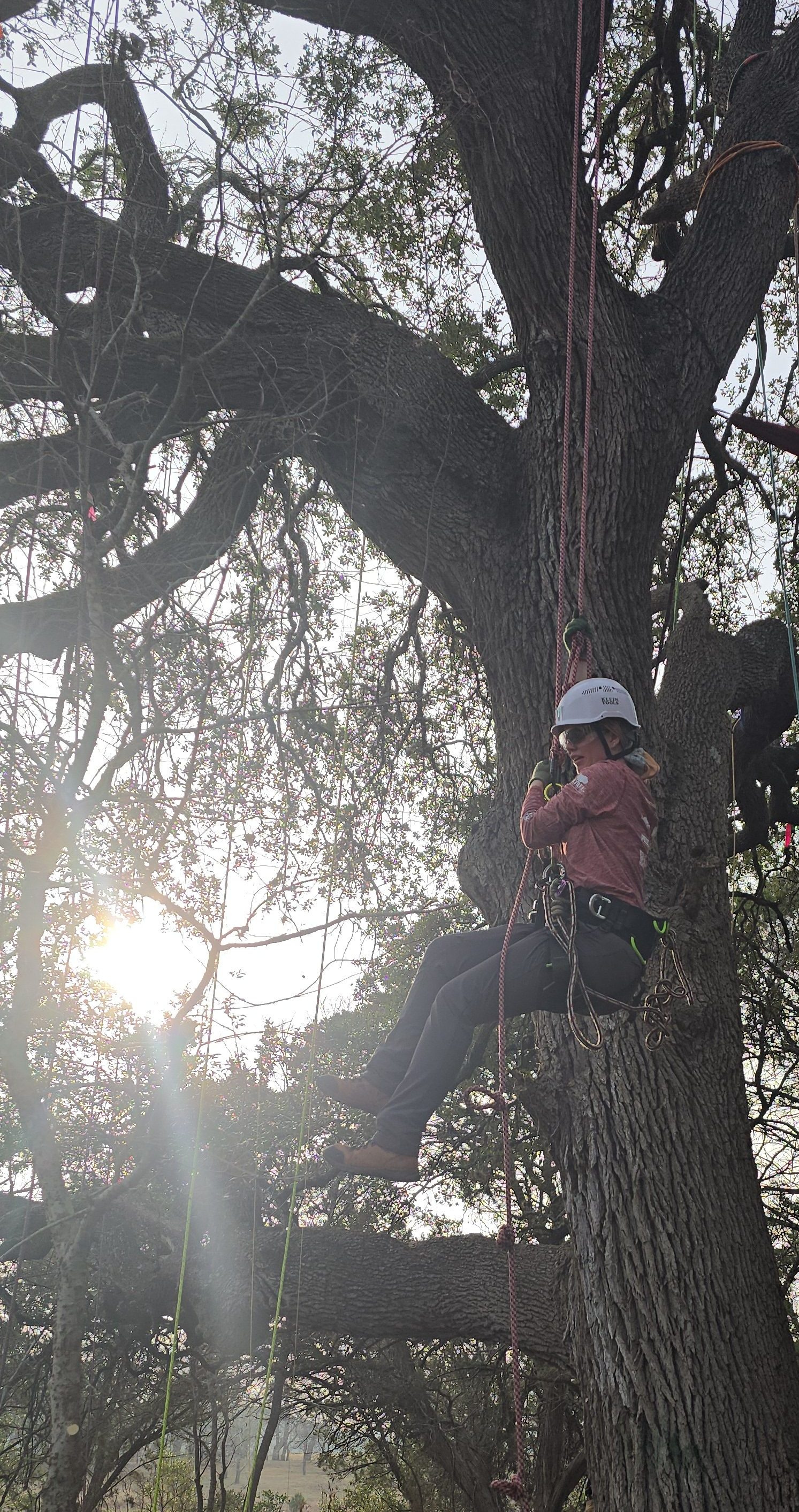
    Last weekend, I attended the Women’s Tree Climbing Workshop and it fundamentally changed my perspective on my life in the last 18 months. I haven’t decided if I’ll share some of the details at a later date, as it is very personal, but suffice it to say–I’m a changed woman.

    The next day, I found out that I passed the Tree Risk Assessment Qualification. I was (and still am) over the moon about this accomplishment!

    Many of my clients aren’t familiar with Tree Risk Assessments, so let’s break it down:

    What are Tree Risk Assessments?

    Trees, like life, carry inherent risk. When a tree fails, it can have severe consequences. However, most trees carry low risk and the ecosystem benefits that they provide frequently outweigh the risks they pose to community.

    Tree Risk Assessments help tree managers/owners (homeowners, landlords, renters, etc) determine how to manage the risk of a particular tree or set of trees through the help of a trained professional (Tree Risk Assessor) to identify the potential causes of tree failure, the consequences of failure and how to mitigate the risk of a tree failing.

    As someone who was raised in communities with reduced canopy, many trees are removed because any risk of failure is unacceptable to the person responsible for the care of the tree. This can be due to perceived or actual costs associated with tree care like watering, pruning, or home/liability insurance.

    As your tree risk assessor, I’m providing an impartial view of how to mitigate risk while balancing the ecosystem benefits of a tree in your care.

    How can I reduce the risk of my tree failing?

    I’m a fan of the phrase coined by Benjamin Franklin ” an ounce of prevention is worth a pound of cure”.

    Trees are living beings. They’re all individuals and require different kinds of care to stay healthy–just like humans.

    However, structural pruning, consistent watering and planting the right tree in the right place, in the right season for the right reason will likely set up your tree for generations of success.

    Plant Expertise for your Community

    Having an expert in your back pocket that understands plant biology and knows how to apply plant ecology processes for the health of your plant community is invaluable.

    Investing in the care of your plant community–trees, shrubs, wildflowers, grasses, mosses, lichen, and more–is a return on investment that is counted in generations, not decades.

    An experienced plant scientist guiding the way to sustainable systems of care for your community supports the peace of mind that only a healthy landscape provides.

    Marching Orders

    I’ll be in Utah next week for the Rare Plant Meeting; I’ll be providing the closing presentation on Day 2, marking the beginning of a new year for the plant and people communities in the high desert. I highly encourage everyone to attend either in-person or on Zoom.

    On March 10th, I’ll be interviewed on Career Opportunities in Ecology webinar with the Ecological Society of America, sharing my career journey and advice for folks entering ecological career fields.

    I look forward to connecting with you all soon!

  • Memorials & Trees

    Memorial Day commemorates the sacrifices of service members. According to the National Cemetery Administration, it began after Major General Logan issued the ‘Memorial Day Act’ in 1866 to remember fallen soldiers after the American Civil War and a day to decorate their memorials with flowers and other mementos.

    However, this day has started including those who haven’t served in the military. Many communities use this day to visit graves of their loved ones.

    Why do we use plants to honor the dead?

    Many plants follow the same seasons, literally and metaphorically, as humans: we’re born, we live, we rest, we may have offspring, we hold roles in our communities, we pass away.

    In the spring, we awake after a long, cold winter. In the summer, we grow–reaching peak fullness in early autumn when we return to deep rest in the winter. While each part of the world varies, we can affirm that this cycle has existed for all life for time immemorial.

    All of our lives are tied to the green world around us. It’s a natural thing to live a life and honor that experience through the beings that are always near us, bringing childlike joy and wonder to everyday living, including the end of our loved ones lives.

    Why are trees so popular as memorials?

    Trees are arguably one, if not the most, ‘charismatic megaflora’ on Earth. In other words, beings that are so impressive to the naked eye that it provokes an emotional reaction; we physically look up to them and frequently care for them as family members.

    Long-lived species like oaks offer a way to commune with our loved ones long after their passing. Trees give protection from harsh rays, cool our homes, live for many human generations, provide food and shelter for innumerable species, serve as a keystone connection to ecological habitat and are a constant physical reminder honoring those that have passed.

    Humans & Trees

    Humans and trees are more alike than folks may realize. While physically, we may differ, we have been in relationship with our tall, woody friends for a very long time.

    One could say that we heal trauma and damage similarly through compartmentalization that occurs faster near new growth, and find resilience in where we are planted.

    All trees may have similar forms and structure (in the sense that they have secondary growth as woody material), but not all species of trees are directly related to each other or even have common ancestors. This is a scientific phenomenon called convergent evolution.

    How incredible is it that that so many different beings that have differ in community roles end up sharing similar traits even though they aren’t ‘actually’ related? It kind of sounds human, doesn’t it?

    How do I choose a tree as a memorial?

    This can be a hard question as it becomes more complicated depending on exactly the answer you’re looking for.

    We can separate the following advice into three different categories for the folks that will be assisting you during this difficult time: your arborist, the funeral director and a spiritual advisor/clergy. All of these experts should be in conversation with each other and your family.

    You can find a Certified Arborist through the Trees Are Good: Find An Arborist search function.

    Your arborist should follow the adage: ‘right tree, right place, right reason, right season’. They will likely ask if you have a species, leaf colors, flowering or anything particular in mind that reminds you of the person you have lost.

    Your arborist should be trained on how to plant a tree properly, keeping in mind the size, location especially in regards to long term maintenance and should communicate this to you. The US Forest Service provides a great manual for tree owners.

    If you’re choosing to inter your relative in a cemetery, talk about tree care and what the tree maintenance schedule looks like with funeral home/cemetery staff. If the trees are not well-maintained, especially over graves and memorials, other important details for your relative’s resting place may be overlooked.

    Both deciduous and evergreen trees are suitable, depending on the story the family is trying to tell. It may be wise to ask if the family wants a tree that ‘follows’ the seasons (in the sense that it goes dormant every year) or one that ‘perpetuates’ all of the seasons (that the tree doesn’t enter dormancy in the winter).

    This phrasing may not work for you, so feel free to explore how to ask these questions with someone that supports the family during difficult times such as clergy or the funeral director.

    Planting saplings can be therapeutic for families that have lost children. As the tree grows and reaches maturity, one can remember that seeds can be shared with friends and relatives to commemorate life events.

    Trees are just as unique as people and have characteristics that shine in different seasons:

    A native redbud (Cercis occidentalis or Cercis canadensis) which blooms in early spring for a loved one that had a birthday during that time or to celebrate new life after a long winter. The heart shaped leaves that exist throughout the growing season evoke a sense of whimsy and have charismatic movement when the wind blows by.

    Perhaps the person who passed away loved water and was creative. If appropriate site conditions exist, a native willow species may be a good option. Many creative opportunities exist with willow, especially within weaving traditions.

    Be open to what moves and inspires you.

    I lost a tree that means a lot to me. What are my options?

    Depending on many factors like the species, health, and existing risk you may be able to support your memorial tree as a ‘snag’.

    ‘Snags’ are trees that have died, but still exist as habitat. They fill ecological roles beyond their natural life. An excellent online resource for your arborist is Cavity Conservation Initiative.

    If the tree is not able to be turned into a snag, you can request to keep burls or other prime pieces of wood for art pieces, furniture, frames for paintings, or other creative expressions.

    If all else, you may be able to request to mulch the tree and keep the mulch for your use. or use for firewood. Please remember to keep felled trees on your property. It helps reduce spread of invasive species & diseases.

    I’d like to celebrate a tree in my life

    Here is a short list of ceremonies to explore. This isn’t a ‘scientific’ list of things you can do to save a tree, but rather a way to come to terms spiritually and emotionally with events that are co-occuring to you and the tree.

    When you plant a tree, consider taking photos. You can write letters to the tree and place them on the branches, or bury them in the soil.

    Commit to watering your newly planted tree on certain days of the week. After establishment, consider doing deep waterings seasonally.

    When you have decided to remove the tree, let the tree know what is happening. Sit with the tree and chat with them. Thank them for anything they’ve helped you with: shade, food, play, etc.

    When decline begins, ask the tree to produce seed so you can propagate its progeny. Some trees will produce vast amounts of seed at the end of its life anyway, but it doesn’t hurt to ask.

    When you’ve removed a tree, consider building a fire with the felled wood. Try writing letters of good memories and place them in the fire. As the smoke reaches into the sky, so will your thanks. The cooled ashes have many uses and can be reused.