

Subscribe to continue reading
Subscribe to get access to the rest of this post and other subscriber-only content.

Subscribe to get access to the rest of this post and other subscriber-only content.
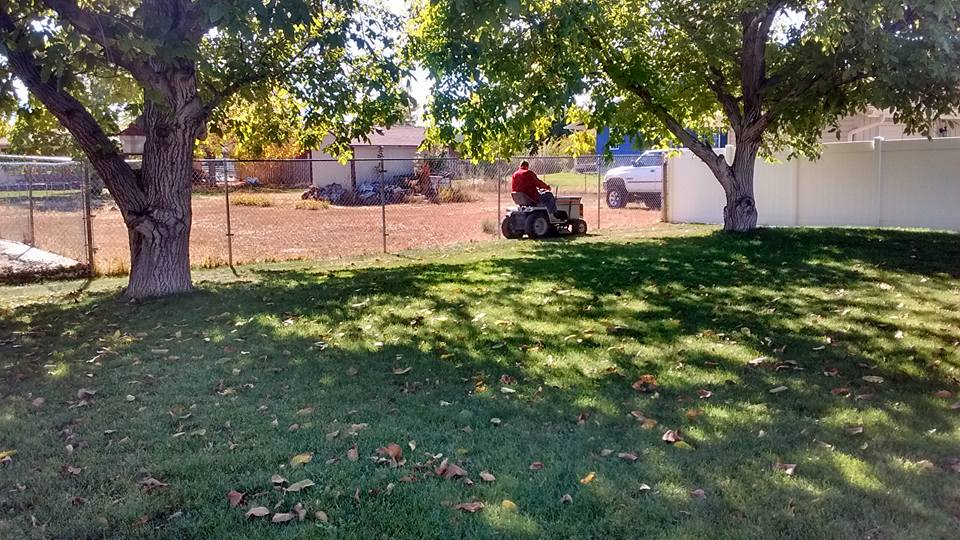
My brother wrote this poem about the walnut trees in our maternal grandparent’s backyard. I loved it and asked if I could share it on my website and he accepted. I hope you enjoy it as much as I do.
The Walnut Tree
by Broden Abbott
Strong and steady,
Whispering in the wind,
Amber leaves flutter to the ground far below.
The thumping of the hulls like drums,
Gravity’s slow song. A hearty harvest.
Winter approaches. For a while yet, the light dances through branches.
There it stands, resolute, ready for the Spring Rain that may not come.
Waiting, the drops of early May stream gloriously down the trunk.
Another desert sun. Another arid winter. Yet still unbroken.
Many trips around Sol, many happy gatherings under green leaves. All is well.
Then comes Man, with his god given dominion.
Gone.
Yet the saw spares the nuts. Ingenuity strikes. The hour is upon us!
Bursting forth from darkness, sprouting ever upward towards the heavens,
The Walnut Tree is filled with vigor.
A second chance.
In the photo taken by Broden, there are two walnut trees. The walnut on the right was removed due to a neighbor’s child having a severe nut allergy. Our grandparents removed the tree for the safety of the child.
However, the tree’s life wasn’t taken in vain. Folks came to pick up the wood for projects and firewood. A bowl and vessel (photographs taken by our maternal uncle, Drew Bartholomew) were made by a neighbor to honor the memory of our grandfather and the walnut tree.


How can we honor the plant-people (e.g. trees) and the human-people in our communities daily within the seasonal cycles of loss and renewal?

A plant key is a tool used to artificially classify a plant based on it’s physical characteristics. Typically, these keys feature conserved characteristics like reproductive structures as they rarely change from generation-to-generation in plants.
However, with many plants, especially trees, it can be hard to identify the plant because there is a short window to observe their reproductive structures. This is why we use vegetative parts in our keys.
In this key, we’ve used multiple characteristics to help users learn how to see plant patterns from a botanist’s perspective. Try making your own key from plants in your community! We’ve included many resources in the pdf for you to explore.
While apps and AI can be helpful in identifying plant species, it’s not recommeneded. Plant taxonomy experts look at all sorts of small characteristics to build a plant profile for artificial keys.
Frequently, apps will provide the wrong species due to many factors like: wrong location, poor cell service, blurry photos, no identification tied to herbarium-vouchered specimens, etc.
Addiitonally, there are better tools available! Try iNaturalist, an app that uses verified source material and subject matter experts from around the world to help accurately identify plant species.
There are multiple free on-demand and live ISA CEU training opportunities available this week.
ISA Texas Spanish Webinar Series
Escalada de árboles / Tree Climbing
Presented by:Eduardo Gorostieta-Maldonado, They Might Be Monkeys
Every 3rd Wednesday @ 6:30am CST
NASA DEVELOP and Clarksville, TN @ 11:00am Central
Clarksville, TN is experiencing rapid urban tree canopy loss due to development pressure, putting the city at greater risk of flooding, rising temperatures, and declining environmental quality. This webinar will highlight two NASA DEVELOP projects that used Earth Observation data to assess the impact of canopy loss on stormwater management and urban heat island intensity. Fellows from the DEVELOP team will present their methods and findings, and Clarksville’s City Forester will share how the data is being used to inform public outreach, strengthen advocacy efforts, and guide local urban forestry planning and policy. Join us to explore how science and local action can work together to build a more resilient urban forest.
Leverage Data for Environmental Justice @ 11:00am Central
Breece will explore how geospatial innovation and community leadership are driving a more just, data-informed future for urban greening and tree equity. Then we’ll learn about Tree Charlotte’s data driven initiative, Treesilience, and how it maintains and plants trees in Charlotte’s under-canopied and underserved neighborhoods.
Must be an ISA Certified Arborist
Colorado : 10 CEUs, Sept 13, 2025
The Webinar Portal, a product of Southern Regional Extension Forestry (SREF) and winner of the 2011 USDA Forest Service’s Two Chiefs’ Partnership Award, is a “multi discipline” web platform used to promote and deliver live and on-demand virtual events and webinars focused on forestry, agriculture, conservation, climate science and other natural resource disciplines.
Watch a video and pass the quiz to qualify for free ISA CEUs.
Introduction to Arboriculture Safety (1.25 ISA CEUs)
In this program, you will learn about general tree care safety so that you can avoid accidents while working in the field.
Susan Harwood Grant program OSHA Trainings (Up to 5 ISA CEUs)
Remember, you can always ask your local ISA chapter if your event qualifies for CEUs.
If your organization is hosting a free in-person or virtual ISA CEU opportunity, please reach out to so we can share it!
Subscribe to continue to receive free notifications for no-cost ISA CEU events.
*I hope you know you’re supposed to read the title with your best impression of Sting’s reggae-style ‘Englishman in New York’.*
Having roots in Utah, I like to joke that my time in Texas was a two-year mission among the tree people; sharing my love of community spaces and nerding out about plants. As a field botanist (and Certified Arborist), the world of urban forestry is fundamentally interdisciplinary and well-funded.
In reality, my experience wasn’t that lighthearted. I loved many aspects of my job, the agency mission that I supported, the people I worked with, the communities across Texas that I served, but the reality of being on the front lines of the climate crisis was exhausting. Being in a highly visible role while wrestling with the political realities that contradicted good science AND good people was nearly impossible.
Over time, I had to accept that many community leaders had no concept of public land, that plants and trees were alive, nor that parks could be a peaceful havens for the community.

Both Utah and Texas are conservative and deeply red states that have strong, traditional values. However, approaches to educate the general public and community partners about communal property were vastly different.
In Utah, I knew how to convey the importance stewarding public land. Access to public land and conversations about stewardship deeply tied into culture and religious practices, but tend to fully embody western/settler views of ‘wilderness’.
From the perspectives of many Utahns, ‘outsiders’ have negative reputations. The ones I heard growing up usually had to do with littering, fouling communal water sources and destroying established and dispersed camping sites out of ignorance. Most of these environmental abuses I witnessed came from other Utahns, typically in the form of poorly-managed livestock and recreational users on public lands.
When interacting with community members, I knew how to reframe and direct common public land narratives to tie indigenous sovereignty, best management practices and climate change together. In short, I ‘spoke’ the language of the LDS faithful and happily facilitated opportunities to educate inquiring minds. I still do.
Comparatively, Texas has less than 4% public land and a successful targeted anti-littering campaign , but few Texas-specific educational resources address Leave No Trace practices, environmental stewardship and climate change. This is gradually changing due to leaders in environmental education like Texas A&M Forest Service, Texan By Nature, Keep Texas Beautiful, Texas Forestry Association and many others, but it is an uphill battle.
The Texan identity is fundamental to addressing climate change narratives in the state, but developing a love of nature in children there is extraordinarily difficult. In my experience, children from Texas actively disliked and some even feared the outdoors.There’s many reasons, but most of the perspectives I heard seemed related to safety concerns tied to racism and outdoor access, venomous animals, record heat waves, wildfire risk and flooding.
For community members that don’t have the opportunity to build a relationship and responsibility with nature, having regular access to community science educators should be a priority for lawmakers and leaders.
My favorite method of getting families outdoors was partnering with local parks and recreation departments to offer moon-lit Nature and Forest Therapy hikes from late spring to early fall. I developed a hybrid method that made space for participants to feel comfortable outdoors, offer answers to their science questions and practice supervised way-finding.
In other words, it was cooler, the full moon offered enough light to for children to guide their parents on the well-marked trail, reinforced safe interactions with night wildlife, and helped children and adults feel confident to revisit the park during the day.
The roles we play in our careers, interests and communities of origin are an opportunity to foster a love of nature, one of the best ways to inspire hope in young children facing ecological crises in their communities.
My most successful method is building community-led programs that align with narratives which empower undeserved members because that has been my lived experience as a low-income, first generation high school and college graduate.
You may find another method that aligns well with your passions and skills.
As a scientist, I have a responsibility to facilitate conversations and spread knowledge about climate realities. I believe it can be through applied hope and joy. By advocating for responsible stewardship, we can offer culturally-relevant education, skill building, intergenerational investment and personal accountability.
As a person who was once a child, community led me to a career that brings me great joy that I get to share with everyone I meet. How do we foster joy in our relationships to each other and our plant friends?
I think the simplest way is to become friends with a tree.