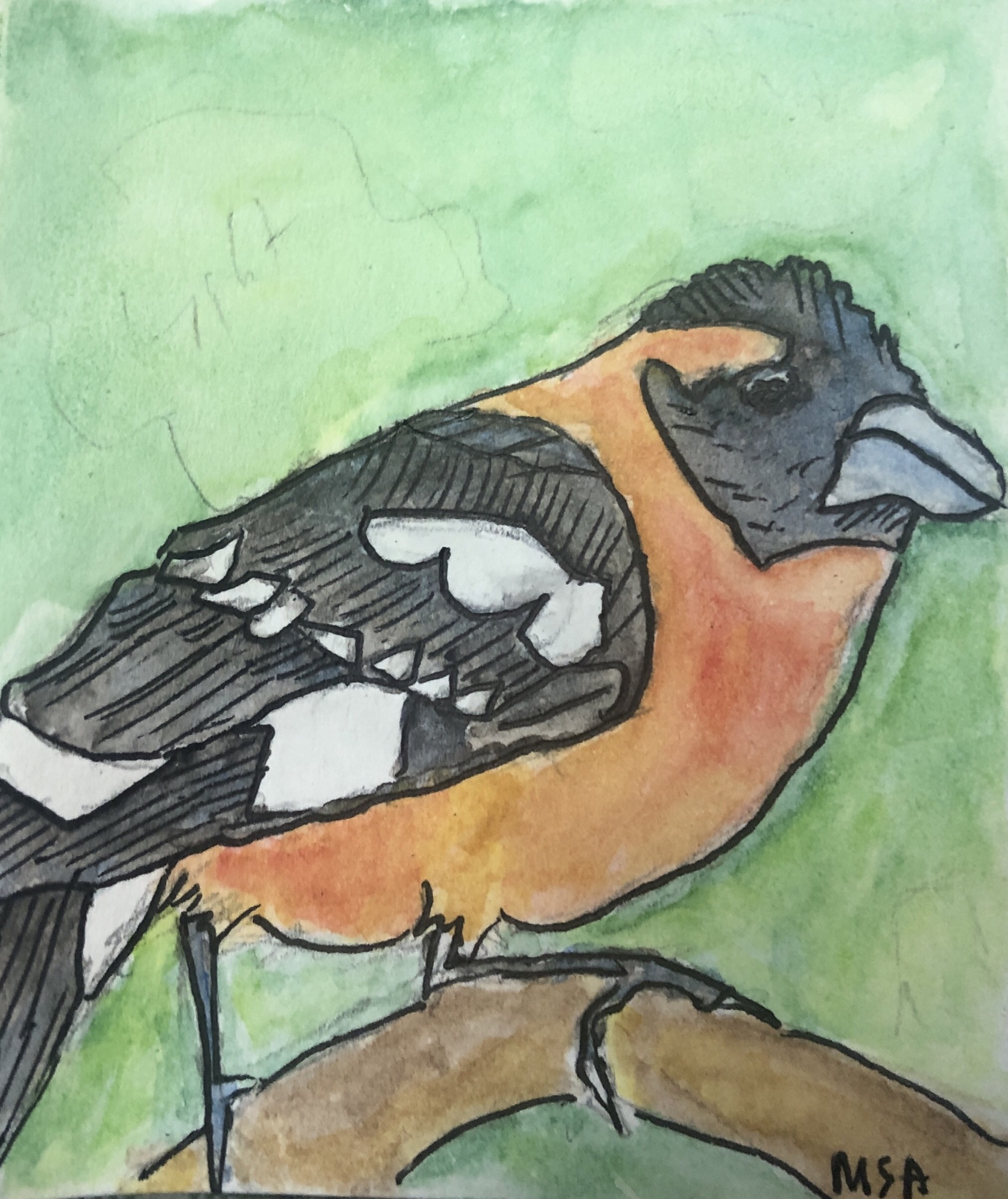
What is World Migratory Bird Day?
World Migratory Bird Day celebrates the birds that travel across the world’s ecosystems, including urban areas.
When is World Migratory Bird Day?
World Migratory Bird Day is celebrated in the Spring and Fall of each year, both on the second Saturdays of May and October.
In the spring, birds fly to nesting sites. In the fall, they fly home to wintering areas. All species of birds vary in their migration patterns. They take different routes and it doesn’t all happen at the same time. These days were chosen to remind communities about the general season of bird migration.
How are migratory birds relevant to urban forests?
It’s not a coincidence that birds are migrating during the leafing out and dormant periods of trees. Trees provide housing, protection, food, observation points, location for mating rituals and much more.
Many species of birds use tree materials to build their homes, just like people (but on a smaller scale). Here’s a short list of nest building materials that you may typically see in your neighborhood:
- sticks
- leaves
- bark
- tree ‘cotton’ (cottonwood seeds)
- lichen
Flocks of migrating birds use urban forests as way-stations to final nesting locations. During migration, many birds are injured or killed due to collisions and urban infrastructure (like large glass windows).
However, many of these final nesting habitats are affected by rapid urbanization. Ideal areas to raise offspring are becoming rarer as biodiversity is reduced in residential and commercial areas. Removal of habitat for homes, commercial buildings and their parking lots and increasing amounts of plant monocultures (like golf courses and residential lawns) have reduced available opportunities for seasonal forage like insects and berries.
Many of the same quality of life issues for trees affect birds. If trees are not well-cared for in a community through management, tree mortality increases. This reduces habitat quality for migratory birds too.
How can I learn more about building bird habitats through tree care?
The Cavity Conservation Initiative has a great manual that describes Best Management Practices for conserving snags, or dead trees for habitat: Tree Care for Wildlife BMPs. It was designed to be used in California, but the information is invaluable for anyone who is interested in forest management.
Avian Flu & World Migratory Bird Day
For the most recent updates for Avian Flu related to migrating birds, visit AllAboutBirds.org.
How can I support migratory birds in my neighborhood?
- Plant native species
- Keep your domestic cats indoors
- Rather than ‘spraying for bugs’, start utilizing Integrative Pest Management strategies to increase biodiversity. Methods vary by area, so reach out to your local Extension office for Best Management Practices (BMPs).
- Turn off lights at night to help birds find their way
- Replace the type of outdoor lights you use to reduce light pollution
- Put stickers on large windows to reduce collisions.
- Support the health of your trees by hiring a Certified Arborist
- When removing a tree, consider keeping it as a snag on the advice of a Certified Arborist who has a Tree Risk Assessment Qualification (TRAQ)
What organizations can I support to help protect birds?