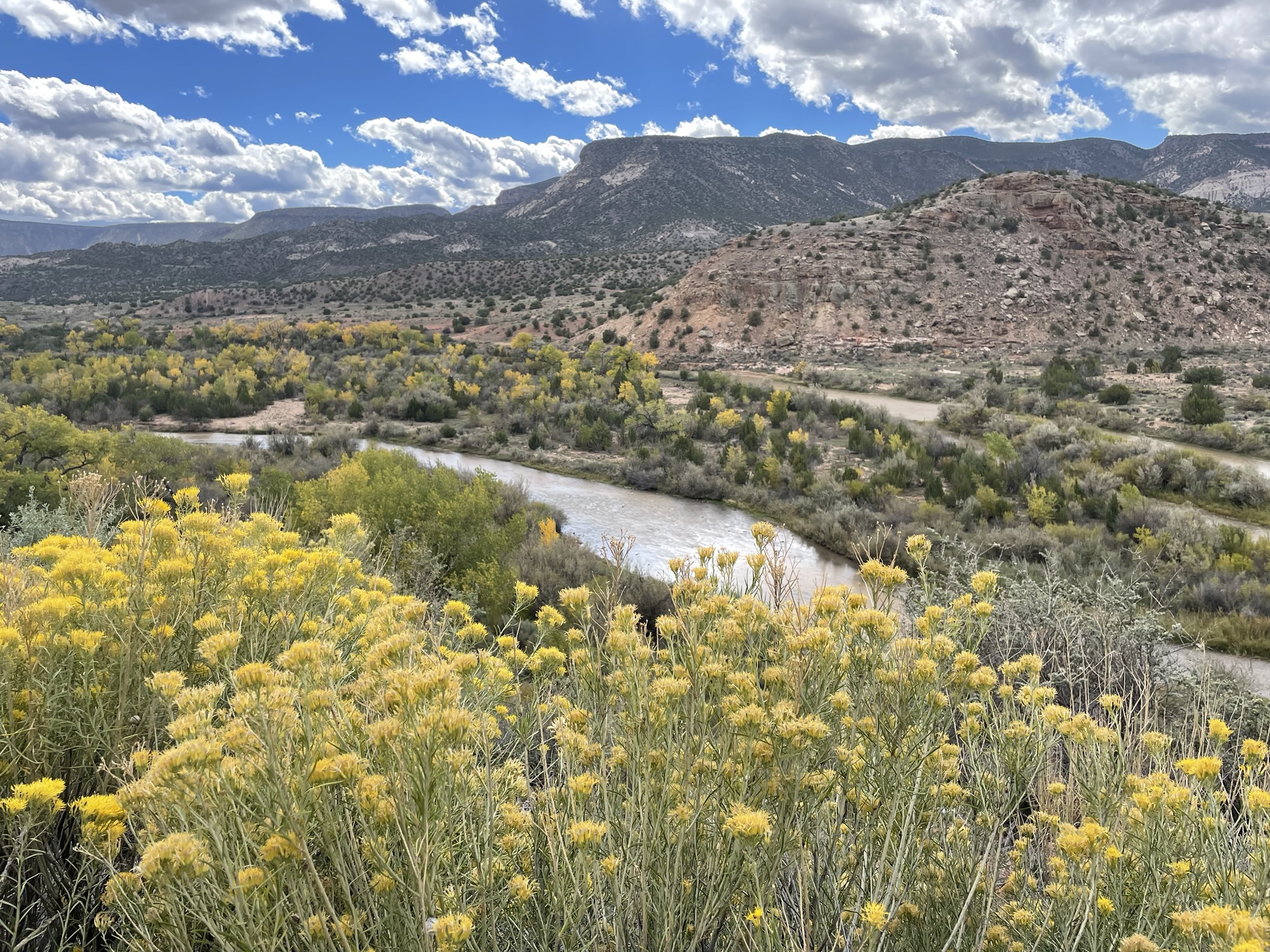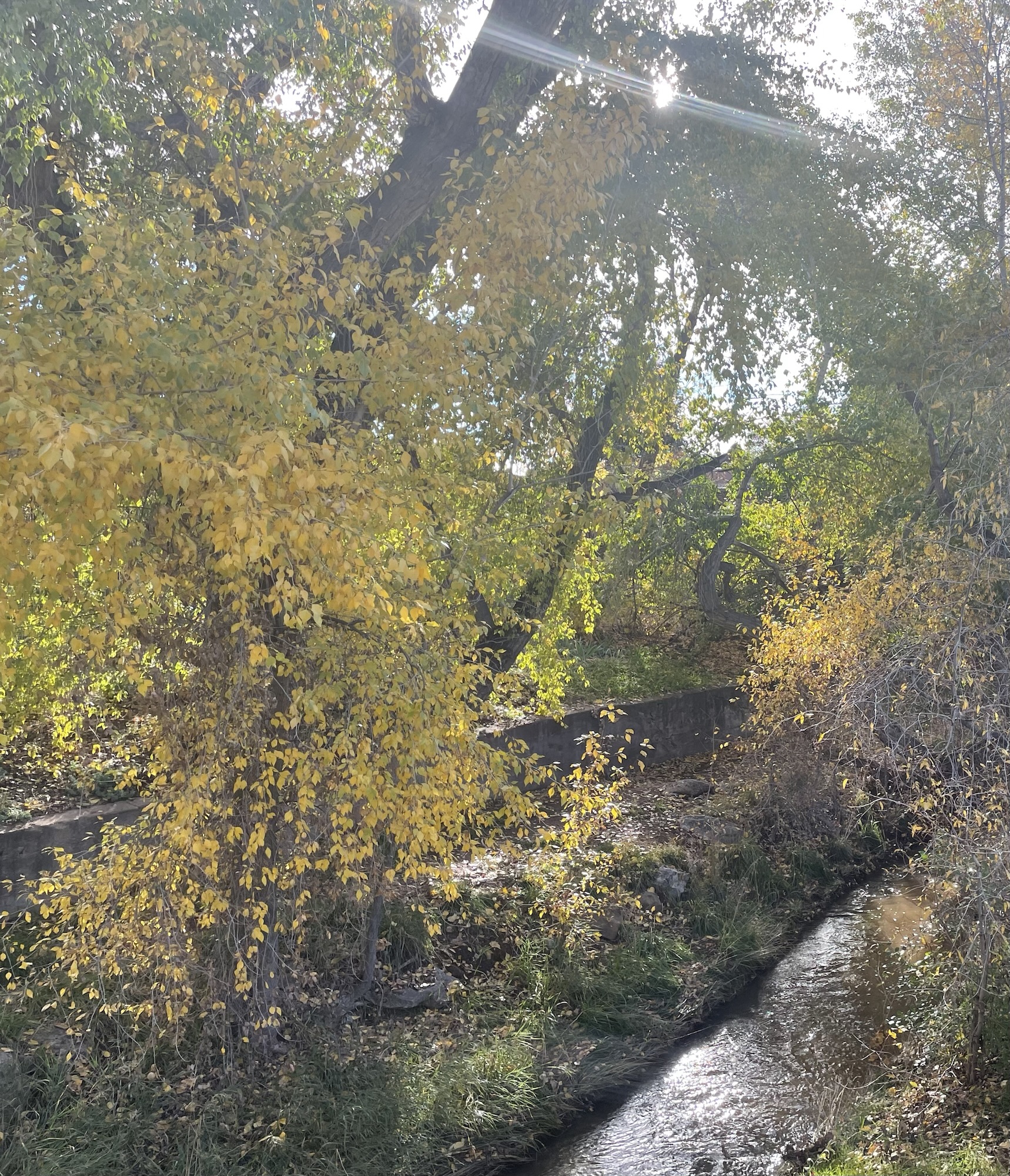
When rivers run high across the Southwest, many communities struggle to cope with floodwater damage after generations of infrastructural challenges including disinvestment and disenfranchisement.
The Biden Administration created history-making opportunities for Green Infrastructure projects by supporting the Inflation Reduction Act (IRA) to mitigate these critical gaps in communities where federal and state funding falls short.
In the same vein, a new infrastructure bill, Bipartisan American Affordability and Jobs Act (BAAJA) has been co-sponsored by Senators Mike Lee (R, Utah) and Martin Heinrich (D, New Mexico).
Significant concerns about BAAJA have been raised by Indigenous organizations, and over 100 environmental advocacy groups. This includes removing key protections enumerated by the Endangered Species Act, Clean Water Act, National Environmental Policy Act (NEPA) and National Historic Preservation Act (NHPA).
EarthJustice, the Earth’s Lawyer, has a high-level synopsis that is available to the public. We recommend reading all eight pages. The Sierra Club also has a summary available.
To summarize, BAAJA severely limits the power of local decision making regarding intersectional environmental concerns and issues.
Most community members are unaware that plants, including trees, have very little protection unless they are endangered species or have municipal ordinances outlining their protection.
When Morgan was assisting the finalization of the Las Vegas Urban Forestry Management Plan, she wrote, proposed and advocated that the following explanation why tree protection should be explicitly included in city ordinances:
“There are no international, federal or state mandates, standards, ordinances or laws that advocate for the protection of trees. Tree City USA communities that have earned Growth Awards lead the country in investing in their urban forests. As part of the recovery process, having guidelines, resources and community-directed
support is helpful. These ordinances are aimed to protect the financial, emotional and ecosystem investment
in the community.” (page 117, #4)
If you’re in the arboriculture industry, you might think “Hey, she’s wrong, we have the ANSI A300 standards and ISA BMPs!”
As an arborist, the “default” of tree management is usually the removal of a tree rather than keeping it (which is why TRAQ 3.0 is so important). The extent of tree protection is decided locally, ideally collaboratively with arborists/municipal tree board, unless a federal law is involved like the Endangered Species Act. As an industry, we frequently interact with federal laws that are impacted by BAAJA. It’s why the Tree Care For Birds BMP was written as a resource for tree care professionals.
The International Society of Arboriculture outlines best management practices–which are not laws. The ANSI A300 standards are technical safety standards which cover the care and maintenance of trees. They aren’t the law and are voluntary, but they could be required in the future and you could be cited for not following them.
Neither A300 standards nor ISA BMPs exist to advocate for any and all trees to be explicitly protected under the law. Trees, land, water, animals, etc don’t have unilateral, inalienable rights like humans do in the United States. There’s local exceptions, like the Tree that Owns Itself in Georgia.
In general, a tree isn’t a legal person and doesn’t have legal rights.
ANSI or ISA are very unlikely to sue you directly for removing a tree without a permit (if required), but the local municipality will (if it was required). The federal government may get involved if there’s an active bald eagle nest that was in the tree you removed without your (if required) permit. When you go to court, the lawyers are likely to cite A300 standards and BMPs to make their case. You may also face issues with your certification if you knowingly violated the ISA Code of Ethics.
When green industry professionals, including arborists, support local environmental protection action in our communities, we advocate for a shift in cultural values that protect the more-than-human world. It means the right trees get planted and cared for in the right place, for the right reason, in the right season.
While watching this week’s CEUs, we invite you consider the broader implications of environmental protection in your community and how they relate to trees.
There are two live webinar CEU opportunities this week.
Wednesday, Nov 11th
Beech Leaf Disease: A Grave Threat to the Queen of the Forest @ 11:00am Mountain
For the past 14 years, arborists and foresters in North America have watched with growing alarm as a condition called Beech Leaf Disease was discovered and spread rapidly through forests and landscapes across a region nearly 3 times the size of the UK. BLD, caused by a foliar nematode and seemingly unprecedented amongst recent tree maladies, has proven extraordinarily difficult to manage. The disease causes a progressive decline and concerning mortality rates in North America’s native beech, Fagus grandifolia. However, widely cultivated European beech are similarly susceptible. Should BLD be found in the UK or the Continent, it would pose grave risks to the iconic “Queen of the Forest” and the ecosystems where F. sylvatica plays a dominant role. In this session, you will learn how the disease affects beech trees, gain confidence in identifying BLD symptoms, and hear the latest research on management options. While forests are naturally dynamic, when it comes to serious invasive species, to be forewarned is to be forearmed.
UAA Webinar: A Brief History of UVM @ 11:00am Mountain
This discussion explores the evolution of Utility Vegetation Management (UVM) alongside the U.S. electric power system—from reactive manual labor to today’s science-based, technology-driven practices. Attendees will examine key milestones in mechanization, Integrated Vegetation Management (IVM), regulation, and innovation, while also exploring future challenges and opportunities in workforce education and advanced sensing technologies.
On-Demand CEUs
Arbsession Training Videos
Forestry Webinars
The Webinar Portal, a product of Southern Regional Extension Forestry (SREF) and winner of the 2011 USDA Forest Service’s Two Chiefs’ Partnership Award, is a “multi discipline” web platform used to promote and deliver live and on-demand virtual events and webinars focused on forestry, agriculture, conservation, climate science and other natural resource disciplines.
TreeStuff Webinars on YouTube
Watch a video and pass the quiz to qualify for free ISA CEUs.
Tree Care Industry Association (TCIA)
Introduction to Arboriculture Safety (1.25 ISA CEUs)
In this program, you will learn about general tree care safety so that you can avoid accidents while working in the field.
Susan Harwood Grant program OSHA Trainings (Up to 5 ISA CEUs)
Remember, you can always ask your local ISA chapter if your event qualifies for CEUs.
If your organization is hosting a free in-person or virtual ISA CEU opportunity, please reach out to so we can share it!
Subscribe to continue to receive free notifications for no-cost ISA CEU events.