

Subscribe to continue reading
Subscribe to get access to the rest of this post and other subscriber-only content.

Subscribe to get access to the rest of this post and other subscriber-only content.
Subscribe to get access to the rest of this post and other subscriber-only content.
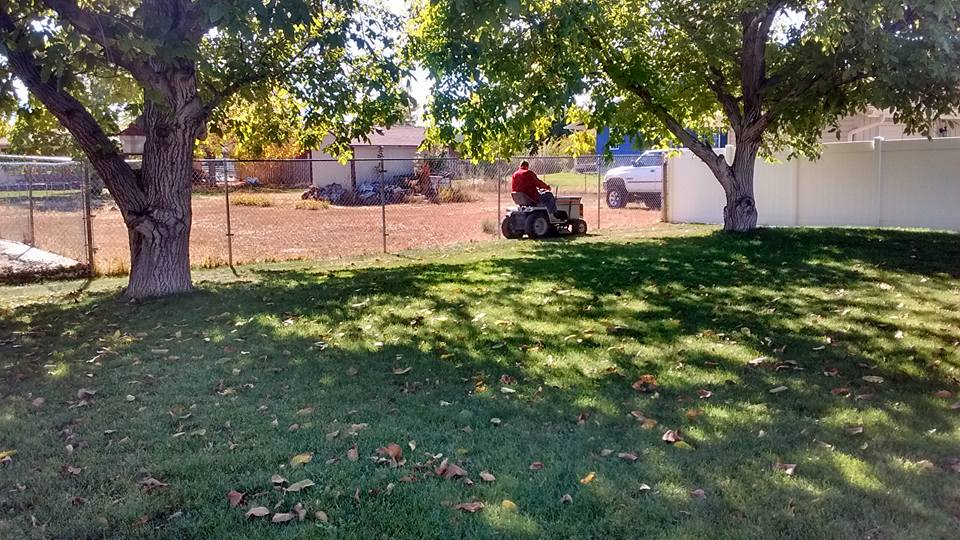
My brother wrote this poem about the walnut trees in our maternal grandparent’s backyard. I loved it and asked if I could share it on my website and he accepted. I hope you enjoy it as much as I do.
The Walnut Tree
by Broden Abbott
Strong and steady,
Whispering in the wind,
Amber leaves flutter to the ground far below.
The thumping of the hulls like drums,
Gravity’s slow song. A hearty harvest.
Winter approaches. For a while yet, the light dances through branches.
There it stands, resolute, ready for the Spring Rain that may not come.
Waiting, the drops of early May stream gloriously down the trunk.
Another desert sun. Another arid winter. Yet still unbroken.
Many trips around Sol, many happy gatherings under green leaves. All is well.
Then comes Man, with his god given dominion.
Gone.
Yet the saw spares the nuts. Ingenuity strikes. The hour is upon us!
Bursting forth from darkness, sprouting ever upward towards the heavens,
The Walnut Tree is filled with vigor.
A second chance.
In the photo taken by Broden, there are two walnut trees. The walnut on the right was removed due to a neighbor’s child having a severe nut allergy. Our grandparents removed the tree for the safety of the child.
However, the tree’s life wasn’t taken in vain. Folks came to pick up the wood for projects and firewood. A bowl and vessel (photographs taken by our maternal uncle, Drew Bartholomew) were made by a neighbor to honor the memory of our grandfather and the walnut tree.


How can we honor the plant-people (e.g. trees) and the human-people in our communities daily within the seasonal cycles of loss and renewal?
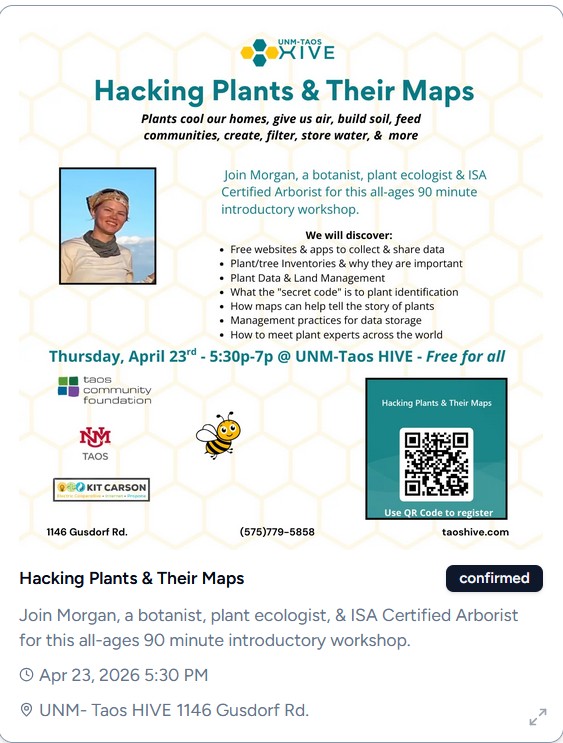
In celebration of the changing of seasons, we’re announcing a community presentation for all audiences.
UNM-Taos Hive is hosting our presentation on plants and technology in communities: Hacking Plants & Their Maps.
If you’ve ever wondered why plants are vital to your community, how to collect data and use that data to make management decisions, this is the community event for you.
We’ll be guiding attendees through the various free tools and resources that are available, tips and tricks to identifying problems in landscapes, and more.
This free presentation has limited seating, so register today to reserve your spot!
We’re looking forward to seeing you!
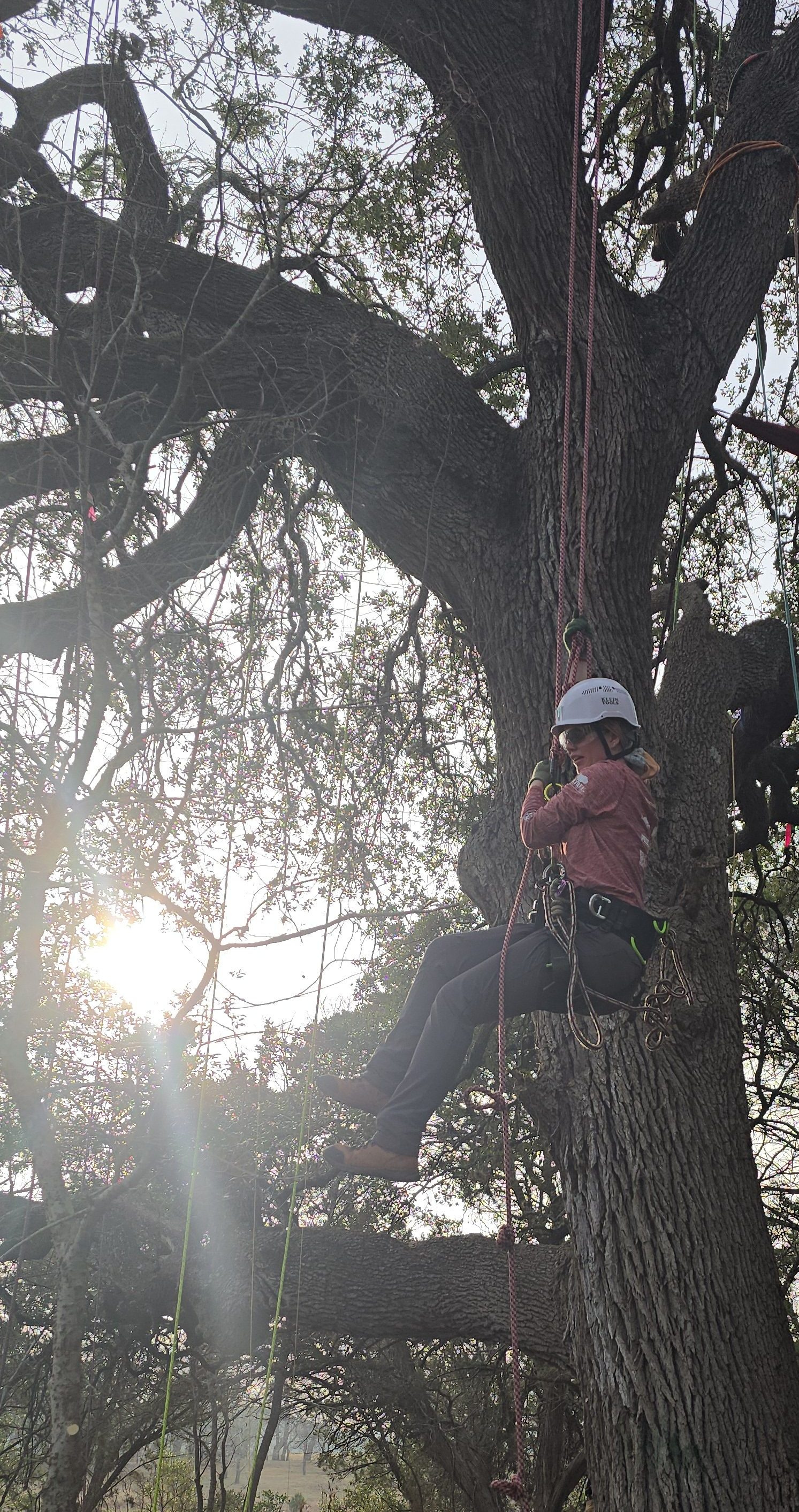
Last weekend, I attended the Women’s Tree Climbing Workshop and it fundamentally changed my perspective on my life in the last 18 months. I haven’t decided if I’ll share some of the details at a later date, as it is very personal, but suffice it to say–I’m a changed woman.
The next day, I found out that I passed the Tree Risk Assessment Qualification. I was (and still am) over the moon about this accomplishment!
Many of my clients aren’t familiar with Tree Risk Assessments, so let’s break it down:
Trees, like life, carry inherent risk. When a tree fails, it can have severe consequences. However, most trees carry low risk and the ecosystem benefits that they provide frequently outweigh the risks they pose to community.
Tree Risk Assessments help tree managers/owners (homeowners, landlords, renters, etc) determine how to manage the risk of a particular tree or set of trees through the help of a trained professional (Tree Risk Assessor) to identify the potential causes of tree failure, the consequences of failure and how to mitigate the risk of a tree failing.
As someone who was raised in communities with reduced canopy, many trees are removed because any risk of failure is unacceptable to the person responsible for the care of the tree. This can be due to perceived or actual costs associated with tree care like watering, pruning, or home/liability insurance.
As your tree risk assessor, I’m providing an impartial view of how to mitigate risk while balancing the ecosystem benefits of a tree in your care.
I’m a fan of the phrase coined by Benjamin Franklin ” an ounce of prevention is worth a pound of cure”.
Trees are living beings. They’re all individuals and require different kinds of care to stay healthy–just like humans.
However, structural pruning, consistent watering and planting the right tree in the right place, in the right season for the right reason will likely set up your tree for generations of success.

Having an expert in your back pocket that understands plant biology and knows how to apply plant ecology processes for the health of your plant community is invaluable.
Investing in the care of your plant community–trees, shrubs, wildflowers, grasses, mosses, lichen, and more–is a return on investment that is counted in generations, not decades.
An experienced plant scientist guiding the way to sustainable systems of care for your community supports the peace of mind that only a healthy landscape provides.
I’ll be in Utah next week for the Rare Plant Meeting; I’ll be providing the closing presentation on Day 2, marking the beginning of a new year for the plant and people communities in the high desert. I highly encourage everyone to attend either in-person or on Zoom.
On March 10th, I’ll be interviewed on Career Opportunities in Ecology webinar with the Ecological Society of America, sharing my career journey and advice for folks entering ecological career fields.
I look forward to connecting with you all soon!