My brother wrote this poem about the walnut trees in our maternal grandparent’s backyard. I loved it and asked if I could share it on my website and he accepted. I hope you enjoy it as much as I do.
The Walnut Tree
by Broden Abbott
Strong and steady,
Whispering in the wind,
Amber leaves flutter to the ground far below.
The thumping of the hulls like drums,
Gravity’s slow song. A hearty harvest.
Winter approaches. For a while yet, the light dances through branches.
There it stands, resolute, ready for the Spring Rain that may not come.
Waiting, the drops of early May stream gloriously down the trunk.
Another desert sun. Another arid winter. Yet still unbroken.
Many trips around Sol, many happy gatherings under green leaves. All is well.
Then comes Man, with his god given dominion.
Gone.
Yet the saw spares the nuts. Ingenuity strikes. The hour is upon us!
Bursting forth from darkness, sprouting ever upward towards the heavens,
The Walnut Tree is filled with vigor.
A second chance.
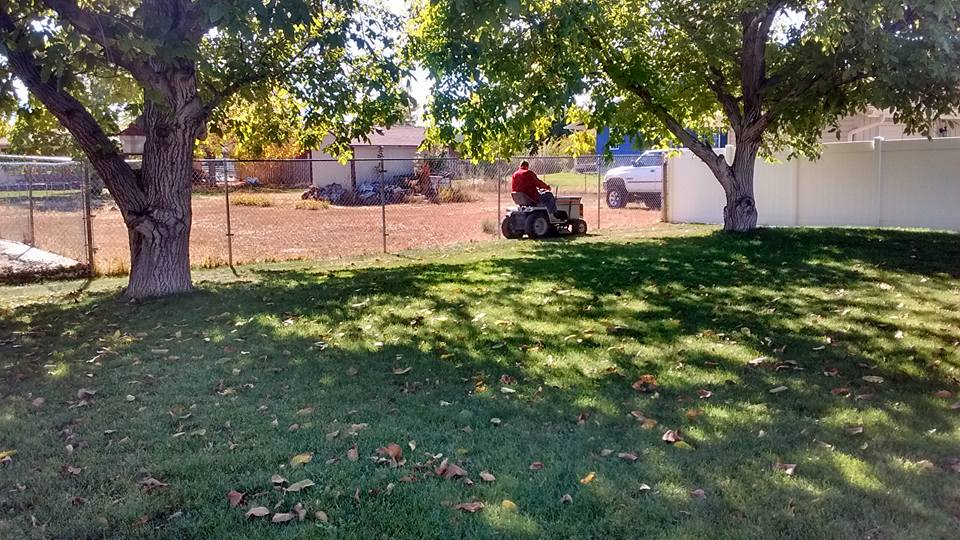
In the photo taken by Broden, there are two walnut trees. The walnut on the right was removed due to a neighbor’s child having a severe nut allergy. Our grandparents removed the tree for the safety of the child.
However, the tree’s life wasn’t taken in vain. Folks came to pick up the wood for projects and firewood. A bowl and vessel (photographs taken by our maternal uncle, Drew Bartholomew) were made by a neighbor to honor the memory of our grandfather and the walnut tree.
Photography by Drew BartholomewPhotography by Drew Bartholomew
How can we honor the plant-people (e.g. trees) and the human-people in our communities daily within the seasonal cycles of loss and renewal?
Knowing and ‘seeing’ plants has saved my life, metaphorically and literally, more than once. Without plant knowledge, my safety would have been at risk. Through plants, we can know where to find water, food, shelter, emotional and spiritual safety. This takes many forms, but building relationships with plants leads to a greater understanding of the world around us. When you take the time to see and recognize the smallest members of life, you begin to appreciate the world differently.
Taking the time to teach the children in your life about plants develops their senses and builds a life-long thirst for knowledge that can’t be quenched. You can start by telling your child a story about some of the plants in your community:
Who planted the tulips on your street?
Why did your grandma plant that tree?
Who taught you how to garden?
Why did your relatives always keep sagebrush on the dashboard of their cars?
What is your favorite plant (flower, tree, etc) and why?
Did you ever go to a community tree planting? What was that like?
What smells from plants feel like home to you?
What does that plant feel like?
What happens when you touch that plant’s flowers?
I love a story, so I’ll tell you a few of mine.
I have moved so many times in my life that I’ve lost count of the homes I’ve had, but I’ve always had plants to provide insight into where I was, where I am going, what time of year I was in and build relationships around me.
In each place I’ve lived, I had friends parents, ‘adoptive’ and biological relatives and many other community members have deep care for my well-being. All had one thing in common: they taught me about plants. It was rarely formal; it was usually going for a walk on the way to the library, church or an event. Or for the sake of getting fresh air.
When I was around 8, one of my friend’s parent’s taught me how to harvest berries in Nussloch: “The ones low to the ground are for the foxes and the tallest ones are for the birds. We can eat the ones in the middle, but we need to take only the smallest amount we need so other people can eat them too.”
When I was a toddler, my paternal grandmother, Barbara, shared her love of roses with me and my mother. It was a source of joy for their relationship. My grandmother taught me the parts of the roses before we moved away, ‘Here’s the petal, here’s the thorns, when you miss me take a big whiff of one and know I’ll be with you.’ I still take big whiffs of roses any time I see one.
She got me into community plantings. I can’t remember if it was when I was in Germany or Spanish Fork, but we had a small flat of purple pansies to plant and I didn’t know how to. She showed me how to break apart the roots so that they could thrive and not keep growing in a circle. After the planting, every time we walked by, I could see the ones we planted because they were brighter than the rest. She loved blackberry shakes from Barry’s, an alligator jaw or a bearclaw, and a Pepsi.
My paternal grandmother dressed up in leather and black cowboy hat in Spanish Fork, Utah.
My Ma Jewel and Opa were outdoorsy people and taught generations of our family how to ‘be’ outdoors. I met them in person when I was around 13 after moving back to Utah. They had a beautiful yard filled with fruit trees and vegetables as their landscaping. I remember feeling at home because I recognized the rhubarb in their yard. I hadn’t seen it since I moved away from Germany a few years earlier.
Ma Jewel & Opa
Their son, Paul, is my maternal grandfather. He taught me how to love the desert and to how find water by following the cottonwoods. He told me about Big Tree, a “granddaddy” ponderosa in Central Utah, “Get up there to visit before you get too big to put your arms around it.”
Papa at the Big Tree in Central Utah.
I haven’t made it to that big tree yet, but I was able to visit a different Big Tree in high school as a field trip in one of my science classes before it died in the Pole Creek Fire. One of my favorite traditions that I learned from my science teacher was to eat sardines when you climb a mountain or visit a big tree. Thanks to my grandpa’s wise words, I haven’t outgrown hugging trees.
There are many, many people who have taught me. Some I haven’t mentioned to maintain their privacy, others I may not remember or know their names, but they gave me a rich gift of knowing plants and providing the tools for me to teach others.
Memorial Day commemorates the sacrifices of service members. According to the National Cemetery Administration, it began after Major General Logan issued the ‘Memorial Day Act’ in 1866 to remember fallen soldiers after the American Civil War and a day to decorate their memorials with flowers and other mementos.
However, this day has started including those who haven’t served in the military. Many communities use this day to visit graves of their loved ones.
Why do we use plants to honor the dead?
Many plants follow the same seasons, literally and metaphorically, as humans: we’re born, we live, we rest, we may have offspring, we hold roles in our communities, we pass away.
In the spring, we awake after a long, cold winter. In the summer, we grow–reaching peak fullness in early autumn when we return to deep rest in the winter. While each part of the world varies, we can affirm that this cycle has existed for all life for time immemorial.
All of our lives are tied to the green world around us. It’s a natural thing to live a life and honor that experience through the beings that are always near us, bringing childlike joy and wonder to everyday living, including the end of our loved ones lives.
Why are trees so popular as memorials?
Trees are arguably one, if not the most, ‘charismatic megaflora’ on Earth. In other words, beings that are so impressive to the naked eye that it provokes an emotional reaction; we physically look up to them and frequently care for them as family members.
Long-lived species like oaks offer a way to commune with our loved ones long after their passing. Trees give protection from harsh rays, cool our homes, live for many human generations, provide food and shelter for innumerable species, serve as a keystone connection to ecological habitat and are a constant physical reminder honoring those that have passed.
How incredible is it that that so many different beings that have differ in community roles end up sharing similar traits even though they aren’t ‘actually’ related? It kind of sounds human, doesn’t it?
How do I choose a tree as a memorial?
This can be a hard question as it becomes more complicated depending on exactly the answer you’re looking for.
We can separate the following advice into three different categories for the folks that will be assisting you during this difficult time: your arborist, the funeral director and a spiritual advisor/clergy. All of these experts should be in conversation with each other and your family.
Your arborist should follow the adage: ‘right tree, right place, right reason, right season’. They will likely ask if you have a species, leaf colors, flowering or anything particular in mind that reminds you of the person you have lost.
Your arborist should be trained on how to plant a tree properly, keeping in mind the size, location especially in regards to long term maintenance and should communicate this to you. The US Forest Service provides a great manual for tree owners.
If you’re choosing to inter your relative in a cemetery, talk about tree care and what the tree maintenance schedule looks like with funeral home/cemetery staff. If the trees are not well-maintained, especially over graves and memorials, other important details for your relative’s resting place may be overlooked.
Both deciduous and evergreen trees are suitable, depending on the story the family is trying to tell. It may be wise to ask if the family wants a tree that ‘follows’ the seasons (in the sense that it goes dormant every year) or one that ‘perpetuates’ all of the seasons (that the tree doesn’t enter dormancy in the winter).
This phrasing may not work for you, so feel free to explore how to ask these questions with someone that supports the family during difficult times such as clergy or the funeral director.
Planting saplings can be therapeutic for families that have lost children. As the tree grows and reaches maturity, one can remember that seeds can be shared with friends and relatives to commemorate life events.
Trees are just as unique as people and have characteristics that shine in different seasons:
A native redbud (Cercis occidentalis or Cercis canadensis) which blooms in early spring for a loved one that had a birthday during that time or to celebrate new life after a long winter. The heart shaped leaves that exist throughout the growing season evoke a sense of whimsy and have charismatic movement when the wind blows by.
Perhaps the person who passed away loved water and was creative. If appropriate site conditions exist, a native willow species may be a good option. Many creative opportunities exist with willow, especially within weaving traditions.
Be open to what moves and inspires you.
I lost a tree that means a lot to me. What are my options?
Depending on many factors like the species, health, and existing risk you may be able to support your memorial tree as a ‘snag’.
‘Snags’ are trees that have died, but still exist as habitat. They fill ecological roles beyond their natural life. An excellent online resource for your arborist is Cavity Conservation Initiative.
If the tree is not able to be turned into a snag, you can request to keep burls or other prime pieces of wood for art pieces, furniture, frames for paintings, or other creative expressions.
If all else, you may be able to request to mulch the tree and keep the mulch for your use. or use for firewood. Please remember to keep felled trees on your property. It helps reduce spread of invasive species & diseases.
I’d like to celebrate a tree in my life
Here is a short list of ceremonies to explore. This isn’t a ‘scientific’ list of things you can do to save a tree, but rather a way to come to terms spiritually and emotionally with events that are co-occuring to you and the tree.
When you plant a tree, consider taking photos. You can write letters to the tree and place them on the branches, or bury them in the soil.
Commit to watering your newly planted tree on certain days of the week. After establishment, consider doing deep waterings seasonally.
When you have decided to remove the tree, let the tree know what is happening. Sit with the tree and chat with them. Thank them for anything they’ve helped you with: shade, food, play, etc.
When decline begins, ask the tree to produce seed so you can propagate its progeny. Some trees will produce vast amounts of seed at the end of its life anyway, but it doesn’t hurt to ask.
When you’ve removed a tree, consider building a fire with the felled wood. Try writing letters of good memories and place them in the fire. As the smoke reaches into the sky, so will your thanks. The cooled ashes have many uses and can be reused.
In honor of National Bike month, we’re exploring the impacts of cycling on urban forests.
On a personal level, I am an avid cyclist. It was my main form of transportation until I bought my first car around 23. Before that, I walked, took the bus, rode my bike and got rides with friends. It was a bit easier back when UTA had expanded routes, but due to lack of accessibility, it limited the opportunities for my education and career.
On a professional level, I advocate for the reduction of car dependency in our communities on multiple levels. This tends to be a controversial take since most of the United States lacks comprehensive alternatives for personal vehicles.
Let’s examine how bicycles positively impact urban forests:
What are the main contributing factors to urban tree decline in communities?
Most certified arborists, tree workers, tree surgeons and other folks in the industry would widely agree that the leading causes of tree mortality are related to:
watering: drought and/or over-watering, depending on local climate and soils
poor site selection, preparation, planting and establishment which leads to soil compaction and root damage
overall environmental stress: pollution, urban heat and increased storm runoff due to impermeable surfaces
The Arbor Day Foundation has a great phrase that we all love to use: “Right Tree, Right Place, Right Reason”. It’s a great reminder to keep in mind the leading causes of preventable tree mortality in communities.
How do urban forests influence public health outcomes related to car pollution?
I like to think of trees as oases in communities. They provide innumerable ecosystem benefits, or ‘ecosystem jobs’ in our neighborhoods: shade, cooling, water purification, water percolation, erosion reduction, biodiversity hubs, habitat for wildlife, food, etc. These benefits begin to decline when trees are exposed to environmental stressors like poor water quality, car pollution and root compaction.
Cars produce various kinds of pollution: noise, particulate matter, volatile organic compounds, nitrous oxides, carbon monoxide, sulfur dioxide and carbon dioxide.
Unfortunately, urban trees aren’t as ubiquitous in every neighborhood as one might hope. In communities that have been denied environmental justice, they are disproportionately affected by pollution and lack of green spaces, including vehicular emissions.
In urban forestry, we call this the 10-20-30 (or Santamour) rule: No more than 10% of the same species, no more than 20% of the same genus and no more than 30% of the same family.
When the complete life cycle of the following modes are taken into account, the carbon emissions are approximately: Bicycle, 21 g CO2/passenger/km traveled Electric-assist bicycle, 22 g CO2/passenger/km traveled Passenger car, 271 g CO2/passenger/km traveled Bus, 101 CO2/passenger/km traveled. European Cyclists’ Federation, 2011 – Cycle more often 2 cool down the planet: Quantifying CO2 savings of cycling
If 20% of Madison, Wisconsin commuters biked to work, it would save 16,687 tons of carbon dioxide emissions, a value of $366,577. If 20% of Milwaukee commuters biked to work, it would save 40,718 tons of carbon dioxide emissions, a value of $821,282. Grabow, M., et al., 2010 – Valuing Bicycling’s Economic and Health Impacts in Wisconsin, January 2010
Bicycle traffic in Copenhagen prevents 90,000 tons of CO2 from being emitted annually. City of Copenhagen, 2010 – Bicycle Account, 2010
If 5% of New Yorkers commuting by private car or taxi switched to biking to work, they could save 150 million pounds of CO2 emissions per year, equivalent to the amount reduced by planting a forest 1.3 times the size of Manhattan. Transportation Alternatives, 2008 – Rolling Carbon: Greenhouse Gas Emissions from Commuting in New York City
Half of U.S. schoolchildren are dropped off at school in the family car. If 20% of those living within two miles of school were to bike or walk instead, it would save 4.3 million miles of driving per day. Over a year, that saved driving would prevent 356,000 tons of CO2 and 21,500 tons of other pollutants from being emitted. Pedroso, M., 2008 – Safe Routes to School: Steps to a Greener Future
What activities can you do to celebrate National Bicycle Month ?
Register & Vote in local elections.
Reduce your car use through carpooling, walking, cycling, etc.