

Subscribe to continue reading
Subscribe to get access to the rest of this post and other subscriber-only content.
Subscribe to get access to the rest of this post and other subscriber-only content.
My brother wrote this poem about the walnut trees in our maternal grandparent’s backyard. I loved it and asked if I could share it on my website and he accepted. I hope you enjoy it as much as I do.
The Walnut Tree
by Broden Abbott
Strong and steady,
Whispering in the wind,
Amber leaves flutter to the ground far below.
The thumping of the hulls like drums,
Gravity’s slow song. A hearty harvest.
Winter approaches. For a while yet, the light dances through branches.
There it stands, resolute, ready for the Spring Rain that may not come.
Waiting, the drops of early May stream gloriously down the trunk.
Another desert sun. Another arid winter. Yet still unbroken.
Many trips around Sol, many happy gatherings under green leaves. All is well.
Then comes Man, with his god given dominion.
Gone.
Yet the saw spares the nuts. Ingenuity strikes. The hour is upon us!
Bursting forth from darkness, sprouting ever upward towards the heavens,
The Walnut Tree is filled with vigor.
A second chance.
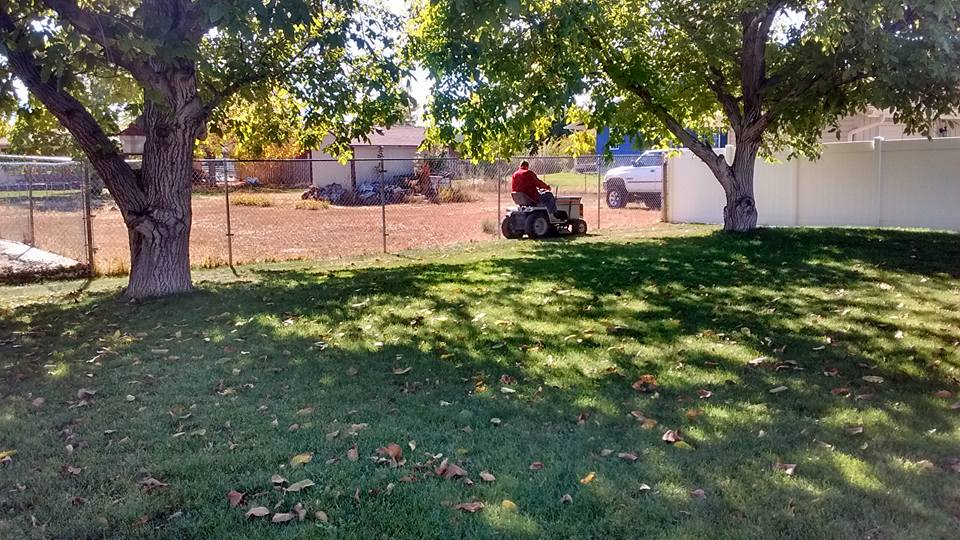
In the photo taken by Broden, there are two walnut trees. The walnut on the right was removed due to a neighbor’s child having a severe nut allergy. Our grandparents removed the tree for the safety of the child.
However, the tree’s life wasn’t taken in vain. Folks came to pick up the wood for projects and firewood. A bowl and vessel (photographs taken by our maternal uncle, Drew Bartholomew) were made by a neighbor to honor the memory of our grandfather and the walnut tree.


How can we honor the plant-people (e.g. trees) and the human-people in our communities daily within the seasonal cycles of loss and renewal?
We are kind and we are straightforward.
We will explain the problems that we see, the likely reasons why it is impacting your community, recommendations to help you move forward, provide assistance navigating potential drawbacks or roadblocks and help you advocate for the outcomes you are seeking.
We are not the end-all and be-all arbiters or gifters of knowledge.
We recognize and honor that all participants in our work hold valuable knowledge that may not be recognized by current systems.
We support all participants to vocalize, share and impart their knowledge with others to build stronger community relationships and improve long-term, sustainable environmental outcomes.
The scientific method is an invaluable tool to empirically navigate data and outcomes.
However, it is not infallible or free from bias.
We utilize flexible multi-modal methodologies to ensure we can offer culturally and ecologically-sound solutions for your community.
For all communities and clients, we explain and follow “Free, Prior and Informed Consent” protocols and best management practices to provide professional recommendations.
Our skill set has been curated to thrive in the context of many relationships.
We work with our partners, whether clients, participants, or other community members individually and collectively.
We refer out, connect others to opportunities and do not gatekeep the growth or development of others for our own or others’ benefit.
We support, advocate and defer leadership to Indigenous communities near and far to guide our professional practice.
We utilize decolonization strategies and resources to become better neighbors to all beings.
We do not judge, prescribe, manipulate, control or use shame to influence decisions.
We are here to empower you and provide professional recommendations that are tailored to your needs.
Plants offer innumerable benefits that affect our physical, emotional, mental, and spiritual health.
We have learned many skills and techniques over the years to help you build plant-people relationships that already exist within you and your community.
We don’t rush and we understand our scope of practice.
We will never recommend an outcome that doesn’t prioritize the health of the land we work with, the safety of our clients or ourselves.
We use open-ended questions, the Socratic method, storytelling techniques, hands-on workshops and more to empower our clients.
We offer ourselves as educators, community members, students and relatives to provide pathways that benefit you.
The opportunity to cherish plants and share that joy with others is becoming increasingly rare in formal and informal educational spaces. I was lucky enough that my then-rural Utah high school offered CTE classes, Agricultural Science classes, AP science classes and a Zoology/Botany class. That is changing as fewer classes nationally and worldwide focus on plants. My alma mater, Utah Valley University, is one of the few universities in the US that educates future botanists.
Knowing and ‘seeing’ plants has saved my life, metaphorically and literally, more than once. Without plant knowledge, my safety would have been at risk. Through plants, we can know where to find water, food, shelter, emotional and spiritual safety. This takes many forms, but building relationships with plants leads to a greater understanding of the world around us. When you take the time to see and recognize the smallest members of life, you begin to appreciate the world differently.
Taking the time to teach the children in your life about plants develops their senses and builds a life-long thirst for knowledge that can’t be quenched. You can start by telling your child a story about some of the plants in your community:
I love a story, so I’ll tell you a few of mine.
I have moved so many times in my life that I’ve lost count of the homes I’ve had, but I’ve always had plants to provide insight into where I was, where I am going, what time of year I was in and build relationships around me.
In each place I’ve lived, I had friends parents, ‘adoptive’ and biological relatives and many other community members have deep care for my well-being. All had one thing in common: they taught me about plants. It was rarely formal; it was usually going for a walk on the way to the library, church or an event. Or for the sake of getting fresh air.
When I was around 8, one of my friend’s parent’s taught me how to harvest berries in Nussloch: “The ones low to the ground are for the foxes and the tallest ones are for the birds. We can eat the ones in the middle, but we need to take only the smallest amount we need so other people can eat them too.”

When I was a toddler, my paternal grandmother, Barbara, shared her love of roses with me and my mother. It was a source of joy for their relationship. My grandmother taught me the parts of the roses before we moved away, ‘Here’s the petal, here’s the thorns, when you miss me take a big whiff of one and know I’ll be with you.’ I still take big whiffs of roses any time I see one.
She got me into community plantings. I can’t remember if it was when I was in Germany or Spanish Fork, but we had a small flat of purple pansies to plant and I didn’t know how to. She showed me how to break apart the roots so that they could thrive and not keep growing in a circle. After the planting, every time we walked by, I could see the ones we planted because they were brighter than the rest. She loved blackberry shakes from Barry’s, an alligator jaw or a bearclaw, and a Pepsi.

My Ma Jewel and Opa were outdoorsy people and taught generations of our family how to ‘be’ outdoors. I met them in person when I was around 13 after moving back to Utah. They had a beautiful yard filled with fruit trees and vegetables as their landscaping. I remember feeling at home because I recognized the rhubarb in their yard. I hadn’t seen it since I moved away from Germany a few years earlier.

Their son, Paul, is my maternal grandfather. He taught me how to love the desert and to how find water by following the cottonwoods. He told me about Big Tree, a “granddaddy” ponderosa in Central Utah, “Get up there to visit before you get too big to put your arms around it.”

I haven’t made it to that big tree yet, but I was able to visit a different Big Tree in high school as a field trip in one of my science classes before it died in the Pole Creek Fire. One of my favorite traditions that I learned from my science teacher was to eat sardines when you climb a mountain or visit a big tree. Thanks to my grandpa’s wise words, I haven’t outgrown hugging trees.
One of my paternal aunts had my botany undergraduate professor as a public school teacher and was thrilled to find out I was also taught by her during my studies.
There are many, many people who have taught me. Some I haven’t mentioned to maintain their privacy, others I may not remember or know their names, but they gave me a rich gift of knowing plants and providing the tools for me to teach others.


