Much to celebrate this week: Tuesday is World Bee Day (remember native bees and birds are pollinators!), Wednesday is World Fish Migration Day, Thursday is International Day for Biological Biodiversity and Friday is World Turtle Day. We will be posting about these informal international holidays and how they relate to urban forestry. There is 1 free ISA CEU training opportunity available this week.
Wednesday May 21, 2025
ITree Open Academy Spring 2025
The view from the top:i-Tree Canopy andOurTrees. You can’t manage your forest resource unless you know what you have. Get an estimate of tree canopy cover for any area or monitor change with a few hours of image analysis. Or save your mouse clicks and see if a quick visit to OurTrees will get you what you need.
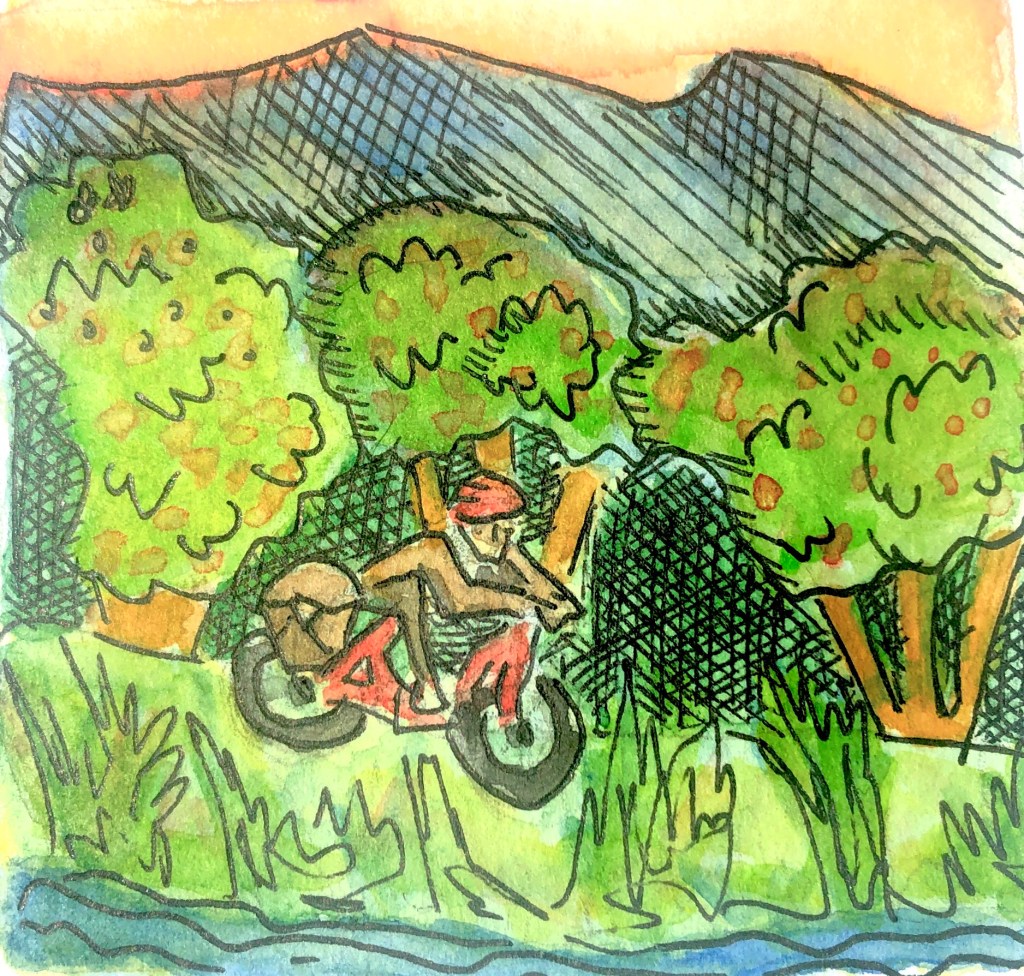
In honor of National Bike month, we’re exploring the impacts of cycling on urban forests.
On a personal level, I am an avid cyclist. It was my main form of transportation until I bought my first car around 23. Before that, I walked, took the bus, rode my bike and got rides with friends. It was a bit easier back when UTA had expanded routes, but due to lack of accessibility, it limited the opportunities for my education and career.
On a professional level, I advocate for the reduction of car dependency in our communities on multiple levels. This tends to be a controversial take since most of the United States lacks comprehensive alternatives for personal vehicles.
Let’s examine how bicycles positively impact urban forests:
What are the main contributing factors to urban tree decline in communities?
Most certified arborists, tree workers, tree surgeons and other folks in the industry would widely agree that the leading causes of tree mortality are related to:
watering: drought and/or over-watering, depending on local climate and soils
poor site selection, preparation, planting and establishment which leads to soil compaction and root damage
overall environmental stress: pollution, urban heat and increased storm runoff due to impermeable surfaces
The Arbor Day Foundation has a great phrase that we all love to use: “Right Tree, Right Place, Right Reason”. It’s a great reminder to keep in mind the leading causes of preventable tree mortality in communities.
How do urban forests influence public health outcomes related to car pollution?
I like to think of trees as oases in communities. They provide innumerable ecosystem benefits, or ‘ecosystem jobs’ in our neighborhoods: shade, cooling, water purification, water percolation, erosion reduction, biodiversity hubs, habitat for wildlife, food, etc. These benefits begin to decline when trees are exposed to environmental stressors like poor water quality, car pollution and root compaction.
Cars produce various kinds of pollution: noise, particulate matter, volatile organic compounds, nitrous oxides, carbon monoxide, sulfur dioxide and carbon dioxide.
Unfortunately, urban trees aren’t as ubiquitous in every neighborhood as one might hope. In communities that have been denied environmental justice, they are disproportionately affected by pollution and lack of green spaces, including vehicular emissions.
In urban forestry, we call this the 10-20-30 (or Santamour) rule: No more than 10% of the same species, no more than 20% of the same genus and no more than 30% of the same family.
When the complete life cycle of the following modes are taken into account, the carbon emissions are approximately: Bicycle, 21 g CO2/passenger/km traveled Electric-assist bicycle, 22 g CO2/passenger/km traveled Passenger car, 271 g CO2/passenger/km traveled Bus, 101 CO2/passenger/km traveled. European Cyclists’ Federation, 2011 – Cycle more often 2 cool down the planet: Quantifying CO2 savings of cycling
If 20% of Madison, Wisconsin commuters biked to work, it would save 16,687 tons of carbon dioxide emissions, a value of $366,577. If 20% of Milwaukee commuters biked to work, it would save 40,718 tons of carbon dioxide emissions, a value of $821,282. Grabow, M., et al., 2010 – Valuing Bicycling’s Economic and Health Impacts in Wisconsin, January 2010
Bicycle traffic in Copenhagen prevents 90,000 tons of CO2 from being emitted annually. City of Copenhagen, 2010 – Bicycle Account, 2010
If 5% of New Yorkers commuting by private car or taxi switched to biking to work, they could save 150 million pounds of CO2 emissions per year, equivalent to the amount reduced by planting a forest 1.3 times the size of Manhattan. Transportation Alternatives, 2008 – Rolling Carbon: Greenhouse Gas Emissions from Commuting in New York City
Half of U.S. schoolchildren are dropped off at school in the family car. If 20% of those living within two miles of school were to bike or walk instead, it would save 4.3 million miles of driving per day. Over a year, that saved driving would prevent 356,000 tons of CO2 and 21,500 tons of other pollutants from being emitted. Pedroso, M., 2008 – Safe Routes to School: Steps to a Greener Future
What activities can you do to celebrate National Bicycle Month ?
Register & Vote in local elections.
Reduce your car use through carpooling, walking, cycling, etc.
Tonight is a full moon, a great time to observe nighttime pollinators on Oenothera and Yucca this evening. What are you noticing?
There is 1 free ISA CEU training opportunity available this week.
Wednesday May 14, 2025
ITree Open Academy Spring 2025
Online withMyTree,i-Tree Design, andi-Tree Planting. Explore the easiest to use online i-Tree tools for individual trees. Get a better sense of their advantages and most common uses.
World Migratory Bird Day celebrates the birds that travel across the world’s ecosystems, including urban areas.
When is World Migratory Bird Day?
World Migratory Bird Day is celebrated in the Spring and Fall of each year, both on the second Saturdays of May and October.
In the spring, birds fly to nesting sites. In the fall, they fly home to wintering areas. All species of birds vary in their migration patterns. They take different routes and it doesn’t all happen at the same time. These days were chosen to remind communities about the general season of bird migration.
How are migratory birds relevant to urban forests?
It’s not a coincidence that birds are migrating during the leafing out and dormant periods of trees. Trees provide housing, protection, food, observation points, location for mating rituals and much more.
Many species of birds use tree materials to build their homes, just like people (but on a smaller scale). Here’s a short list of nest building materials that you may typically see in your neighborhood:
However, many of these final nesting habitats are affected by rapid urbanization. Ideal areas to raise offspring are becoming rarer as biodiversity is reduced in residential and commercial areas. Removal of habitat for homes, commercial buildings and their parking lots and increasing amounts of plant monocultures (like golf courses and residential lawns) have reduced available opportunities for seasonal forage like insects and berries.
Many of the same quality of life issues for trees affect birds. If trees are not well-cared for in a community through management, tree mortality increases. This reduces habitat quality for migratory birds too.
How can I learn more about building bird habitats through tree care?
The Cavity Conservation Initiative has a great manual that describes Best Management Practices for conserving snags, or dead trees for habitat: Tree Care for Wildlife BMPs. It was designed to be used in California, but the information is invaluable for anyone who is interested in forest management.
Avian Flu & World Migratory Bird Day
For the most recent updates for Avian Flu related to migrating birds, visit AllAboutBirds.org.
How can I support migratory birds in my neighborhood?
Plant native species
Keep your domestic cats indoors
Rather than ‘spraying for bugs’, start utilizing Integrative Pest Management strategies to increase biodiversity. Methods vary by area, so reach out to your local Extension office for Best Management Practices (BMPs).
Turn off lights at night to help birds find their way
Replace the type of outdoor lights you use to reduce light pollution
Put stickers on large windows to reduce collisions.
Support the health of your trees by hiring a Certified Arborist
When removing a tree, consider keeping it as a snag on the advice of a Certified Arborist who has a Tree Risk Assessment Qualification (TRAQ)
What organizations can I support to help protect birds?
Originally published in October 2019 and re-published on May 2, 2025.
I’ve seen a number of posts on social media talking about wildcrafting and harvesting. I think it is an excellent opportunity to discuss this botanist’s perspective on ethical harvesting. My personal philosophy is simply this: don’t take more than you can use. However, this also means that you should be mindful of the ecosystem that you are harvesting from.
Here are some key questions you should ask yourself: Does this population have more than 7-10 individuals? Is there another population of this plant nearby? Has this stand already been harvested from?
When I explain this concept to children, I explain that you shouldn’t eat wild plants unless the following conditions have been met:
1.) Has Morgan (or another trusted adult) said it is okay to eat this plant?
2.) What are the ways you can tell this plant is safe to eat (ex. Serviceberry has leaves that look like cat paws, white flowers and/or fruit that looks like blueberries)?
3.) Why do you want to eat/collect this plant?
I ask these questions for a number of reasons. Primarily, it builds critical thinking skills while also building good habits about mindful collection and our role in our environment. When answering the third question, it brings to mind your motivations about why you are using this plant. If this is the only plant that you see and it has already been munched on by animals and you have snacks with you, why collect? Animals don’t have grocery stores or kitchens or appliances to store food, while we, as humans, have innumerable tools at our disposal to eat a relatively healthy diet.
Take Home Points:
1.) Be confident in your plant identification skills. If you aren’t 100% what this plant is, don’t eat it! Take a photo and post it on a plant ID page on social media (Make sure you include your location, photos of flowers, fruits, leaves and habit!).
2.) Count out how many individual plants exist in this area. We are looking for at least 7.
3.) Generally, we shouldn’t collect more than half of what a single plant is producing to make sure that there is enough for animals and the seed bank.
4.) Consider recording GPS coordinates and collecting a specimen for your local herbarium and iNaturalist. This helps local plant enthusiasts understand the distribution of species in an area!
Suggested Literature:
Braiding Sweetgrass: Indigenous Wisdom, Scientific Knowledge, and the Teachings of Plants (Kimmerer, 2013)
Are you interested in cultivating your botanizing skills, wanting to learn about local plants in your yard, or are wanting me to come assist you in a project?





 Abbott Botanical Assessments, LLC