Tag: nature

  • A Botanist in Urban Forestry*

    A Botanist in Urban Forestry*

    *I hope you know you’re supposed to read the title with your best impression of Sting’s reggae-style ‘Englishman in New York’.*

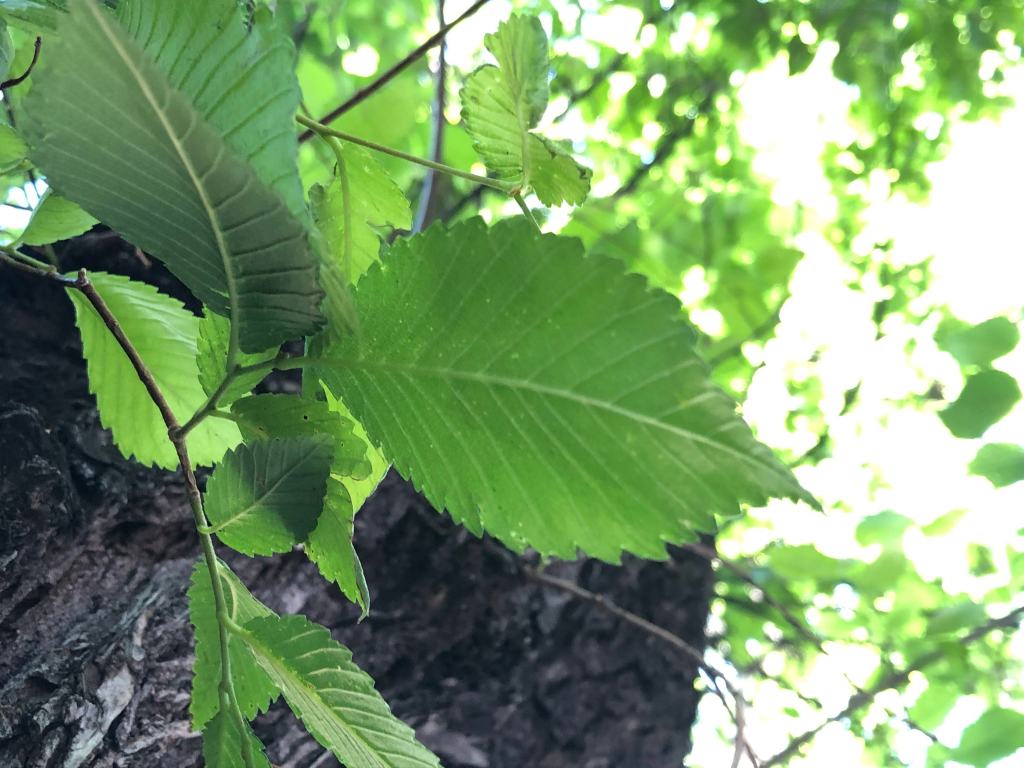
    Having roots in Utah, I like to joke that my time in Texas was a two-year mission among the tree people; sharing my love of community spaces and nerding out about plants. As a field botanist (and Certified Arborist), the world of urban forestry is fundamentally interdisciplinary and well-funded.

    In reality, my experience wasn’t that lighthearted. I loved many aspects of my job, the agency mission that I supported, the people I worked with, the communities across Texas that I served, but the reality of being on the front lines of the climate crisis was exhausting. Being in a highly visible role while wrestling with the political realities that contradicted good science AND good people was nearly impossible.

    Over time, I had to accept that many community leaders had no concept of public land, that plants and trees were alive, nor that parks could be a peaceful havens for the community.

    A live oak trying to survive in Fort Worth, Texas on St Louis Ave & Leuda Street. More than half of its roots were cut and it is still standing. However, a tree may not react to external stressors like these for many seasons.

    Both Utah and Texas are conservative and deeply red states that have strong, traditional values. However, approaches to educate the general public and community partners about communal property were vastly different.

    In Utah, I knew how to convey the importance stewarding public land. Access to public land and conversations about stewardship deeply tied into culture and religious practices, but tend to fully embody western/settler views of ‘wilderness’.

    From the perspectives of many Utahns, ‘outsiders’ have negative reputations. The ones I heard growing up usually had to do with littering, fouling communal water sources and destroying established and dispersed camping sites out of ignorance. Most of these environmental abuses I witnessed came from other Utahns, typically in the form of poorly-managed livestock and recreational users on public lands.

    When interacting with community members, I knew how to reframe and direct common public land narratives to tie indigenous sovereignty, best management practices and climate change together. In short, I ‘spoke’ the language of the LDS faithful and happily facilitated opportunities to educate inquiring minds. I still do.

    Comparatively, Texas has less than 4% public land and a successful targeted anti-littering campaign , but few Texas-specific educational resources address Leave No Trace practices, environmental stewardship and climate change. This is gradually changing due to leaders in environmental education like Texas A&M Forest Service, Texan By Nature, Keep Texas Beautiful, Texas Forestry Association and many others, but it is an uphill battle.

    The Texan identity is fundamental to addressing climate change narratives in the state, but developing a love of nature in children there is extraordinarily difficult. In my experience, children from Texas actively disliked and some even feared the outdoors.There’s many reasons, but most of the perspectives I heard seemed related to safety concerns tied to racism and outdoor access, venomous animals, record heat waves, wildfire risk and flooding.

    For community members that don’t have the opportunity to build a relationship and responsibility with nature, having regular access to community science educators should be a priority for lawmakers and leaders.

    My favorite method of getting families outdoors was partnering with local parks and recreation departments to offer moon-lit Nature and Forest Therapy hikes from late spring to early fall. I developed a hybrid method that made space for participants to feel comfortable outdoors, offer answers to their science questions and practice supervised way-finding.

    In other words, it was cooler, the full moon offered enough light to for children to guide their parents on the well-marked trail, reinforced safe interactions with night wildlife, and helped children and adults feel confident to revisit the park during the day.

    The roles we play in our careers, interests and communities of origin are an opportunity to foster a love of nature, one of the best ways to inspire hope in young children facing ecological crises in their communities.

    My most successful method is building community-led programs that align with narratives which empower undeserved members because that has been my lived experience as a low-income, first generation high school and college graduate.

    You may find another method that aligns well with your passions and skills.

    As a scientist, I have a responsibility to facilitate conversations and spread knowledge about climate realities. I believe it can be through applied hope and joy. By advocating for responsible stewardship, we can offer culturally-relevant education, skill building, intergenerational investment and personal accountability.

    As a person who was once a child, community led me to a career that brings me great joy that I get to share with everyone I meet. How do we foster joy in our relationships to each other and our plant friends?

    I think the simplest way is to become friends with a tree.

  • Free ISA CEUs: Week of June 16, 2025

    Free ISA CEUs: Week of June 16, 2025

    There are multiple free ISA CEU training opportunities available this week.

    Wednesday June 18, 2025

    ISA Texas Spanish Webinar Series

    Instrucciones de trabajo y la importancia de la mitigación de riesgos / Job briefing and the importance of hazard mitigation

    Presented by: Ranferi Lopez-Garcia, Pannell Co.

    Every 3rd Wednesday @ 6:30am CST

    Register Here (scroll to bottom)

    Wednesday June 18, 2025

    Urban & Community Forestry Society (UCFS) Learning Series

    RFP 101 for Urban Forestry: Crafting Effective Requests for Contractor Services in Tree Care and Maintenance

    12:00 pm – 1:30 pm CDT

    Register Here

    Thursday June 19, 2025

    TreeStuff Live Webinar

    Profit Leaks & Pricing Traps (2 CEUs)

    4:00pm MDT

    Watch Here

    Tree Care Industry Association (TCIA)

    Introduction to Arboriculture Safety (1.25 ISA CEUs)

    In this program, you will learn about general tree care safety so that you can avoid accidents while working in the field.

    Susan Harwood Grant program OSHA Trainings (Up to 5 ISA CEUs)

    Remember, you can always ask your local ISA chapter if your event qualifies for CEUs.

    If your organization is hosting a free in-person or virtual ISA CEU opportunity, please reach out to so we can share it!

    Subscribe to continue to receive free notifications for no-cost ISA CEU events.
  • Why Teach Your Children About Plants?

    Why Teach Your Children About Plants?

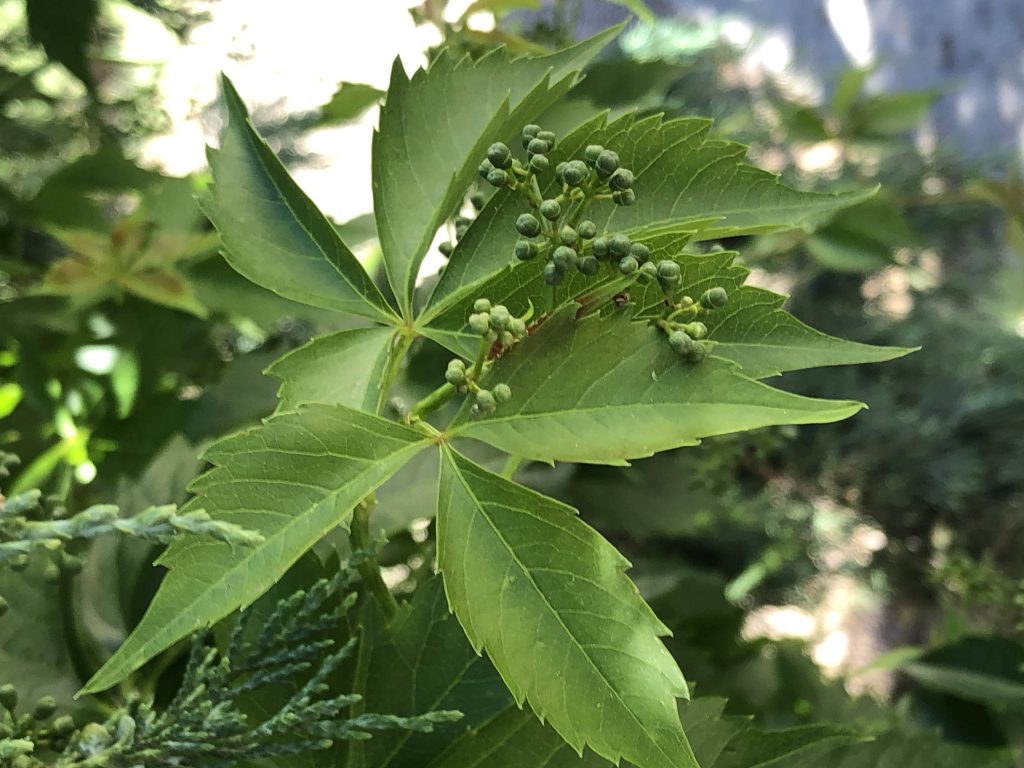
    So they will never be lost and their teachers are always remembered.

    The opportunity to cherish plants and share that joy with others is becoming increasingly rare in formal and informal educational spaces. I was lucky enough that my then-rural Utah high school offered CTE classes, Agricultural Science classes, AP science classes and a Zoology/Botany class. That is changing as fewer classes nationally and worldwide focus on plants. My alma mater, Utah Valley University, is one of the few universities in the US that educates future botanists.

    Knowing and ‘seeing’ plants has saved my life, metaphorically and literally, more than once. Without plant knowledge, my safety would have been at risk. Through plants, we can know where to find water, food, shelter, emotional and spiritual safety. This takes many forms, but building relationships with plants leads to a greater understanding of the world around us. When you take the time to see and recognize the smallest members of life, you begin to appreciate the world differently.

    Taking the time to teach the children in your life about plants develops their senses and builds a life-long thirst for knowledge that can’t be quenched. You can start by telling your child a story about some of the plants in your community:

    • Who planted the tulips on your street?
    • Why did your grandma plant that tree?
    • Who taught you how to garden?
    • Why did your relatives always keep sagebrush on the dashboard of their cars?
    • What is your favorite plant (flower, tree, etc) and why?
    • Did you ever go to a community tree planting? What was that like?
    • What smells from plants feel like home to you?
    • What does that plant feel like?
    • What happens when you touch that plant’s flowers?

    I love a story, so I’ll tell you a few of mine.

    I have moved so many times in my life that I’ve lost count of the homes I’ve had, but I’ve always had plants to provide insight into where I was, where I am going, what time of year I was in and build relationships around me.

    In each place I’ve lived, I had friends parents, ‘adoptive’ and biological relatives and many other community members have deep care for my well-being. All had one thing in common: they taught me about plants. It was rarely formal; it was usually going for a walk on the way to the library, church or an event. Or for the sake of getting fresh air.

    When I was around 8, one of my friend’s parent’s taught me how to harvest berries in Nussloch: “The ones low to the ground are for the foxes and the tallest ones are for the birds. We can eat the ones in the middle, but we need to take only the smallest amount we need so other people can eat them too.”

    Blackberry photo sourced from https://www.fassadengruen.de/en/blackberry.html

    When I was a toddler, my paternal grandmother, Barbara, shared her love of roses with me and my mother. It was a source of joy for their relationship. My grandmother taught me the parts of the roses before we moved away, ‘Here’s the petal, here’s the thorns, when you miss me take a big whiff of one and know I’ll be with you.’ I still take big whiffs of roses any time I see one.

    She got me into community plantings. I can’t remember if it was when I was in Germany or Spanish Fork, but we had a small flat of purple pansies to plant and I didn’t know how to. She showed me how to break apart the roots so that they could thrive and not keep growing in a circle. After the planting, every time we walked by, I could see the ones we planted because they were brighter than the rest. She loved blackberry shakes from Barry’s, an alligator jaw or a bearclaw, and a Pepsi.

    Morgan's paternal grandmother wearing all black and looking like a badass.
    My paternal grandmother dressed up in leather and black cowboy hat in Spanish Fork, Utah.

    My Ma Jewel and Opa were outdoorsy people and taught generations of our family how to ‘be’ outdoors. I met them in person when I was around 13 after moving back to Utah. They had a beautiful yard filled with fruit trees and vegetables as their landscaping. I remember feeling at home because I recognized the rhubarb in their yard. I hadn’t seen it since I moved away from Germany a few years earlier.

    Ma Jewel & Opa

    Their son, Paul, is my maternal grandfather. He taught me how to love the desert and to how find water by following the cottonwoods. He told me about Big Tree, a national champion white fir, up Loafer Canyon, “Get up there to visit before you get too big to put your arms around it.”

    Papa at Big Tree up Loafer Canyon.

    I got to visit Big Tree in high school as a field trip in one of my science classes before it died in the Pole Creek Fire. One of my favorite traditions that I learned from my science teacher was to eat sardines when you climb a mountain or visit a big tree.

    One of my paternal aunts had my botany undergraduate professor as a public school teacher and was thrilled to find out I was also taught by her during my studies.

    There are many, many people who have taught me. Some I haven’t mentioned to maintain their privacy, others I may not remember or know their names, but they gave me a rich gift of knowing plants and providing the tools for me to teach others.

  • Free ISA CEUs: Week of June 9, 2025

    Free ISA CEUs: Week of June 9, 2025

    There are multiple free ISA CEU training opportunities available this week.

    Wednesday June 4, 2025

    ITree Open Academy Spring 2025

    Putting i-Tree to Work. Take a whirlwind tour through the many ways that i-Tree can be used to further your tree initiatives, from communication to site selection to accountability metrics. Get inspired and make a plan to put i-Tree to work for you.

    Wednesdays @ 1pm EST (May 7-June 11, 2025)

    Register Here

    Tree Care Industry Association (TCIA)

    Introduction to Arboriculture Safety (1.25 ISA CEUs)

    In this program, you will learn about general tree care safety so that you can avoid accidents while working in the field.

    Susan Harwood Grant program OSHA Trainings (Up to 5 ISA CEUs)

    Tree Stuff Webinars

    TreeStuff is providing online training seminars by experts from around the world to increase your knowledge on everything tree care related – from rigging techniques to plant health care to chainsaw safety – all for absolutely free.

    Watch Webinars Here

    Remember, you can always ask your local ISA chapter if your event qualifies for CEUs.

    If your organization is hosting a free in-person or virtual ISA CEU opportunity, please reach out to so we can share it!

    Subscribe to continue to receive free notifications for no-cost ISA CEU events.

  • Free ISA CEUs: Week of June 2, 2025

    Free ISA CEUs: Week of June 2, 2025

    Juniper, a resilient tree to commemorate two international holidays this week: World Environment Day is on Thursday and World Food Safety Day is on Saturday.

    There are 2 free ISA CEU training opportunities available this week.

    Wednesday June 4, 2025

    ISA Texas Spanish Webinar Series

    Cómo hacer el corte de poda perfecto / How to make the perfect pruning cut

    Presented by: Ariel Splenser, Consultant

    Every 3rd Wednesday @ 6:30am CST

    Register Here (scroll to bottom)

    Wednesday June 4, 2025

    ITree Open Academy Spring 2025

    i-Tree Eco, the flagship tool. i-Tree Eco is where the latest science goes first. It is a large, flexible tool that offers much more than we can cover in a single hour. We’ll help you decide if Eco is right for you and let you know where to go to learn more.

    Wednesdays @ 1pm EST (May 7-June 11, 2025)

    Register Here

    Remember, you can always ask your local ISA chapter if your event qualifies for CEUs.

    If your organization is hosting a free in-person or virtual ISA CEU opportunity, please reach out to us so we can get your event on this list.

    Subscribe to continue to receive free notifications for no-cost ISA CEU events.