Tag: urban forestry

  • Free New Mexican Urban Tree Dichotomous Key (version 1.0)

    Free New Mexican Urban Tree Dichotomous Key (version 1.0)

    What is a Plant Key?

    A plant key is a tool used to artificially classify a plant based on it’s physical characteristics. Typically, these keys feature conserved characteristics like reproductive structures as they rarely change from generation-to-generation in plants.

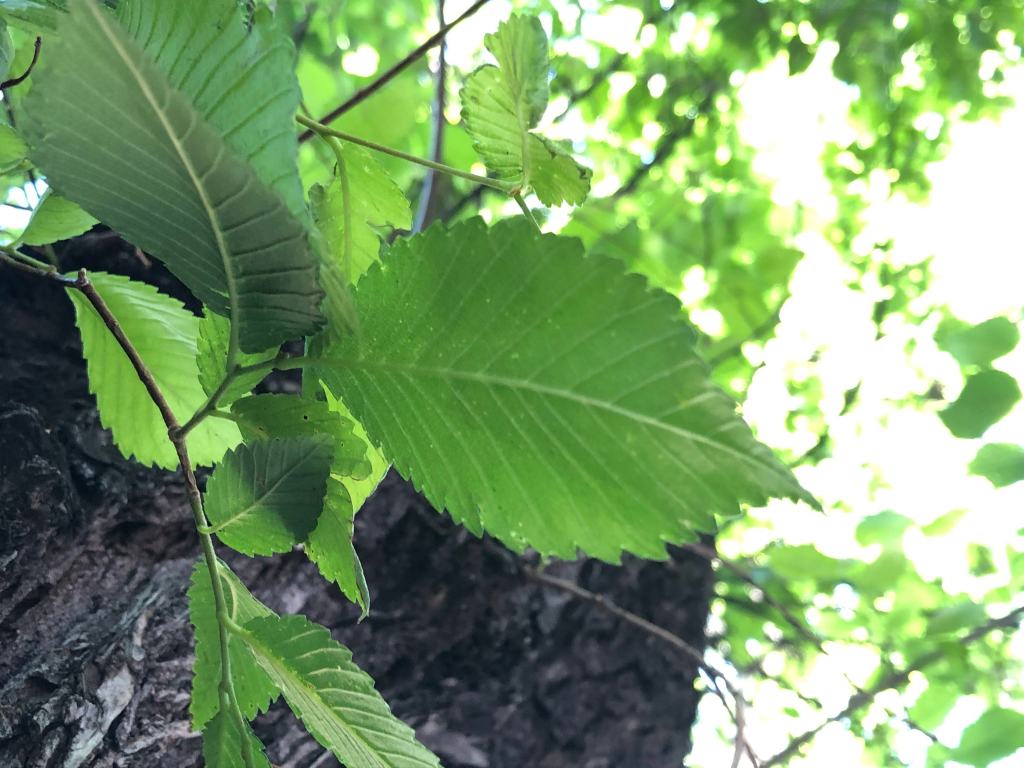
    However, with many plants, especially trees, it can be hard to identify the plant because there is a short window to observe their reproductive structures. This is why we use vegetative parts in our keys.

    In this key, we’ve used multiple characteristics to help users learn how to see plant patterns from a botanist’s perspective. Try making your own key from plants in your community! We’ve included many resources in the pdf for you to explore.

    Why Should I Use A Plant Key Instead of an App?

    While apps and AI can be helpful in identifying plant species, it’s not recommeneded. Plant taxonomy experts look at all sorts of small characteristics to build a plant profile for artificial keys.

    Frequently, apps will provide the wrong species due to many factors like: wrong location, poor cell service, blurry photos, no identification tied to herbarium-vouchered specimens, etc.

    Addiitonally, there are better tools available! Try iNaturalist, an app that uses verified source material and subject matter experts from around the world to help accurately identify plant species.

  • Free ISA CEUs: Week of August 18, 2025

    Free ISA CEUs: Week of August 18, 2025

    There are multiple free on-demand and live ISA CEU training opportunities available this week.

    Wednesday August 20, 2025

    ISA Texas Spanish Webinar Series

    Escalada de árboles / Tree Climbing

    Presented by:Eduardo Gorostieta-Maldonado, They Might Be Monkeys 

    Every 3rd Wednesday @ 6:30am CST

    Register Here

    Thursday August 21, 2025

    NASA DEVELOP and Clarksville, TN @ 11:00am Central

    Clarksville, TN is experiencing rapid urban tree canopy loss due to development pressure, putting the city at greater risk of flooding, rising temperatures, and declining environmental quality. This webinar will highlight two NASA DEVELOP projects that used Earth Observation data to assess the impact of canopy loss on stormwater management and urban heat island intensity. Fellows from the DEVELOP team will present their methods and findings, and Clarksville’s City Forester will share how the data is being used to inform public outreach, strengthen advocacy efforts, and guide local urban forestry planning and policy. Join us to explore how science and local action can work together to build a more resilient urban forest.

    Register Here

    Leverage Data for Environmental Justice @ 11:00am Central

    Breece will explore how geospatial innovation and community leadership are driving a more just, data-informed future for urban greening and tree equity. Then we’ll learn about Tree Charlotte’s data driven initiative, Treesilience, and how it maintains and plants trees in Charlotte’s under-canopied and underserved neighborhoods.

    Register Here

    Free Cone Collection Training

    Must be an ISA Certified Arborist

    Colorado : 10 CEUs, Sept 13, 2025

    Forestry Webinars

    The Webinar Portal, a product of Southern Regional Extension Forestry (SREF) and winner of the 2011 USDA Forest Service’s Two Chiefs’ Partnership Award, is a “multi discipline” web platform used to promote and deliver live and on-demand virtual events and webinars focused on forestry, agriculture, conservation, climate science and other natural resource disciplines.

    Watch Here

    TreeStuff Webinars on YouTube

    Watch a video and pass the quiz to qualify for free ISA CEUs.

    Watch Here

    Tree Care Industry Association (TCIA)

    Introduction to Arboriculture Safety (1.25 ISA CEUs)

    In this program, you will learn about general tree care safety so that you can avoid accidents while working in the field.

    Susan Harwood Grant program OSHA Trainings (Up to 5 ISA CEUs)

    Remember, you can always ask your local ISA chapter if your event qualifies for CEUs.

    If your organization is hosting a free in-person or virtual ISA CEU opportunity, please reach out to so we can share it!

    Subscribe to continue to receive free notifications for no-cost ISA CEU events.

  • A Botanist in Urban Forestry*

    A Botanist in Urban Forestry*

    *I hope you know you’re supposed to read the title with your best impression of Sting’s reggae-style ‘Englishman in New York’.*

    Having roots in Utah, I like to joke that my time in Texas was a two-year mission among the tree people; sharing my love of community spaces and nerding out about plants. As a field botanist (and Certified Arborist), the world of urban forestry is fundamentally interdisciplinary and well-funded.

    In reality, my experience wasn’t that lighthearted. I loved many aspects of my job, the agency mission that I supported, the people I worked with, the communities across Texas that I served, but the reality of being on the front lines of the climate crisis was exhausting. Being in a highly visible role while wrestling with the political realities that contradicted good science AND good people was nearly impossible.

    Over time, I had to accept that many community leaders had no concept of public land, that plants and trees were alive, nor that parks could be a peaceful havens for the community.

    A live oak trying to survive in Fort Worth, Texas on St Louis Ave & Leuda Street. More than half of its roots were cut and it is still standing. However, a tree may not react to external stressors like these for many seasons.

    Both Utah and Texas are conservative and deeply red states that have strong, traditional values. However, approaches to educate the general public and community partners about communal property were vastly different.

    In Utah, I knew how to convey the importance stewarding public land. Access to public land and conversations about stewardship deeply tied into culture and religious practices, but tend to fully embody western/settler views of ‘wilderness’.

    From the perspectives of many Utahns, ‘outsiders’ have negative reputations. The ones I heard growing up usually had to do with littering, fouling communal water sources and destroying established and dispersed camping sites out of ignorance. Most of these environmental abuses I witnessed came from other Utahns, typically in the form of poorly-managed livestock and recreational users on public lands.

    When interacting with community members, I knew how to reframe and direct common public land narratives to tie indigenous sovereignty, best management practices and climate change together. In short, I ‘spoke’ the language of the LDS faithful and happily facilitated opportunities to educate inquiring minds. I still do.

    Comparatively, Texas has less than 4% public land and a successful targeted anti-littering campaign , but few Texas-specific educational resources address Leave No Trace practices, environmental stewardship and climate change. This is gradually changing due to leaders in environmental education like Texas A&M Forest Service, Texan By Nature, Keep Texas Beautiful, Texas Forestry Association and many others, but it is an uphill battle.

    The Texan identity is fundamental to addressing climate change narratives in the state, but developing a love of nature in children there is extraordinarily difficult. In my experience, children from Texas actively disliked and some even feared the outdoors.There’s many reasons, but most of the perspectives I heard seemed related to safety concerns tied to racism and outdoor access, venomous animals, record heat waves, wildfire risk and flooding.

    For community members that don’t have the opportunity to build a relationship and responsibility with nature, having regular access to community science educators should be a priority for lawmakers and leaders.

    My favorite method of getting families outdoors was partnering with local parks and recreation departments to offer moon-lit Nature and Forest Therapy hikes from late spring to early fall. I developed a hybrid method that made space for participants to feel comfortable outdoors, offer answers to their science questions and practice supervised way-finding.

    In other words, it was cooler, the full moon offered enough light to for children to guide their parents on the well-marked trail, reinforced safe interactions with night wildlife, and helped children and adults feel confident to revisit the park during the day.

    The roles we play in our careers, interests and communities of origin are an opportunity to foster a love of nature, one of the best ways to inspire hope in young children facing ecological crises in their communities.

    My most successful method is building community-led programs that align with narratives which empower undeserved members because that has been my lived experience as a low-income, first generation high school and college graduate.

    You may find another method that aligns well with your passions and skills.

    As a scientist, I have a responsibility to facilitate conversations and spread knowledge about climate realities. I believe it can be through applied hope and joy. By advocating for responsible stewardship, we can offer culturally-relevant education, skill building, intergenerational investment and personal accountability.

    As a person who was once a child, community led me to a career that brings me great joy that I get to share with everyone I meet. How do we foster joy in our relationships to each other and our plant friends?

    I think the simplest way is to become friends with a tree.

  • Memorials & Trees

    Memorial Day commemorates the sacrifices of service members. According to the National Cemetery Administration, it began after Major General Logan issued the ‘Memorial Day Act’ in 1866 to remember fallen soldiers after the American Civil War and a day to decorate their memorials with flowers and other mementos.

    However, this day has started including those who haven’t served in the military. Many communities use this day to visit graves of their loved ones.

    Why do we use plants to honor the dead?

    Many plants follow the same seasons, literally and metaphorically, as humans: we’re born, we live, we rest, we may have offspring, we hold roles in our communities, we pass away.

    In the spring, we awake after a long, cold winter. In the summer, we grow–reaching peak fullness in early autumn when we return to deep rest in the winter. While each part of the world varies, we can affirm that this cycle has existed for all life for time immemorial.

    All of our lives are tied to the green world around us. It’s a natural thing to live a life and honor that experience through the beings that are always near us, bringing childlike joy and wonder to everyday living, including the end of our loved ones lives.

    Why are trees so popular as memorials?

    Trees are arguably one, if not the most, ‘charismatic megaflora’ on Earth. In other words, beings that are so impressive to the naked eye that it provokes an emotional reaction; we physically look up to them and frequently care for them as family members.

    Long-lived species like oaks offer a way to commune with our loved ones long after their passing. Trees give protection from harsh rays, cool our homes, live for many human generations, provide food and shelter for innumerable species, serve as a keystone connection to ecological habitat and are a constant physical reminder honoring those that have passed.

    Humans & Trees

    Humans and trees are more alike than folks may realize. While physically, we may differ, we have been in relationship with our tall, woody friends for a very long time.

    One could say that we heal trauma and damage similarly through compartmentalization that occurs faster near new growth, and find resilience in where we are planted.

    All trees may have similar forms and structure (in the sense that they have secondary growth as woody material), but not all species of trees are directly related to each other or even have common ancestors. This is a scientific phenomenon called convergent evolution.

    How incredible is it that that so many different beings that have differ in community roles end up sharing similar traits even though they aren’t ‘actually’ related? It kind of sounds human, doesn’t it?

    How do I choose a tree as a memorial?

    This can be a hard question as it becomes more complicated depending on exactly the answer you’re looking for.

    We can separate the following advice into three different categories for the folks that will be assisting you during this difficult time: your arborist, the funeral director and a spiritual advisor/clergy. All of these experts should be in conversation with each other and your family.

    You can find a Certified Arborist through the Trees Are Good: Find An Arborist search function.

    Your arborist should follow the adage: ‘right tree, right place, right reason, right season’. They will likely ask if you have a species, leaf colors, flowering or anything particular in mind that reminds you of the person you have lost.

    Your arborist should be trained on how to plant a tree properly, keeping in mind the size, location especially in regards to long term maintenance and should communicate this to you. The US Forest Service provides a great manual for tree owners.

    If you’re choosing to inter your relative in a cemetery, talk about tree care and what the tree maintenance schedule looks like with funeral home/cemetery staff. If the trees are not well-maintained, especially over graves and memorials, other important details for your relative’s resting place may be overlooked.

    Both deciduous and evergreen trees are suitable, depending on the story the family is trying to tell. It may be wise to ask if the family wants a tree that ‘follows’ the seasons (in the sense that it goes dormant every year) or one that ‘perpetuates’ all of the seasons (that the tree doesn’t enter dormancy in the winter).

    This phrasing may not work for you, so feel free to explore how to ask these questions with someone that supports the family during difficult times such as clergy or the funeral director.

    Planting saplings can be therapeutic for families that have lost children. As the tree grows and reaches maturity, one can remember that seeds can be shared with friends and relatives to commemorate life events.

    Trees are just as unique as people and have characteristics that shine in different seasons:

    A native redbud (Cercis occidentalis or Cercis canadensis) which blooms in early spring for a loved one that had a birthday during that time or to celebrate new life after a long winter. The heart shaped leaves that exist throughout the growing season evoke a sense of whimsy and have charismatic movement when the wind blows by.

    Perhaps the person who passed away loved water and was creative. If appropriate site conditions exist, a native willow species may be a good option. Many creative opportunities exist with willow, especially within weaving traditions.

    Be open to what moves and inspires you.

    I lost a tree that means a lot to me. What are my options?

    Depending on many factors like the species, health, and existing risk you may be able to support your memorial tree as a ‘snag’.

    ‘Snags’ are trees that have died, but still exist as habitat. They fill ecological roles beyond their natural life. An excellent online resource for your arborist is Cavity Conservation Initiative.

    If the tree is not able to be turned into a snag, you can request to keep burls or other prime pieces of wood for art pieces, furniture, frames for paintings, or other creative expressions.

    If all else, you may be able to request to mulch the tree and keep the mulch for your use. or use for firewood. Please remember to keep felled trees on your property. It helps reduce spread of invasive species & diseases.

    I’d like to celebrate a tree in my life

    Here is a short list of ceremonies to explore. This isn’t a ‘scientific’ list of things you can do to save a tree, but rather a way to come to terms spiritually and emotionally with events that are co-occuring to you and the tree.

    When you plant a tree, consider taking photos. You can write letters to the tree and place them on the branches, or bury them in the soil.

    Commit to watering your newly planted tree on certain days of the week. After establishment, consider doing deep waterings seasonally.

    When you have decided to remove the tree, let the tree know what is happening. Sit with the tree and chat with them. Thank them for anything they’ve helped you with: shade, food, play, etc.

    When decline begins, ask the tree to produce seed so you can propagate its progeny. Some trees will produce vast amounts of seed at the end of its life anyway, but it doesn’t hurt to ask.

    When you’ve removed a tree, consider building a fire with the felled wood. Try writing letters of good memories and place them in the fire. As the smoke reaches into the sky, so will your thanks. The cooled ashes have many uses and can be reused.

  • Free ISA CEUs: Week of May 19, 2025

    Free ISA CEUs: Week of May 19, 2025

    Much to celebrate this week: Tuesday is World Bee Day (remember native bees and birds are pollinators!), Wednesday is World Fish Migration Day, Thursday is International Day for Biological Biodiversity and Friday is World Turtle Day. We will be posting about these informal international holidays and how they relate to urban forestry. There is 1 free ISA CEU training opportunity available this week.

    Wednesday May 21, 2025

    ITree Open Academy Spring 2025

    The view from the top: i-Tree Canopy and OurTrees. You can’t manage your forest resource unless you know what you have. Get an estimate of tree canopy cover for any area or monitor change with a few hours of image analysis. Or save your mouse clicks and see if a quick visit to OurTrees will get you what you need.

    Wednesdays @ 1pm EST (May 7-June 11, 2025)

    Register Here

    Remember, you can always ask your local ISA chapter if your event qualifies for CEUs.

    If your organization is hosting a free in-person or virtual ISA CEU opportunity, please reach out to us so we can get your event on this list.

    Subscribe to continue to receive free notifications for no-cost ISA CEU events.