Tag: health

  • World Pollinator Day & Urban Ecology

    World Pollinator Day & Urban Ecology

    What is World Pollinator Day?

    World Pollinator Day, or World Bee Day, is an environmental awareness holiday to support the critical role of pollinators in our communities.

    Why should I care about World Pollinator Day?

    As we describe on this blog frequently, all life is connected.

    Angiosperms, or flowering plants, make up about 80% of all life on earth–over 250,000 species. Of these species, a significant portion are food crops and 35% of all food crops are pollinated.

    The health of the environment is directly tied to our health and pollinators. Scientists have specific vocabulary that describes that relationship: indicator species. Indicator species aren’t always pollinators , but can be amphibians, birds and other organisms that show the effects of climate and environmental change so acutely, we can measure their presence to show the impacts of environmental change.

    What are pollinators?

    Pollinators include many kinds of life, not just insects. Birds, bats and some mammals are also pollinators, (including humans). These organisms have a long relationship with flowering plants through a process called co-evolution.

    Why do scientists say that we’re in a mass extinction event?

    If you speak to your parents, grandparents or folks that are older than you, you will likely hear about how much the world has changed since they were you age. This doesn’t necessarily apply to just technology or economic changes, but also includes changes in your environment. You may have also noticed differences in your environment as you have gotten older. I know I have.

    I’m in my early 30s, but I moved around and traveled a lot as a kid. Some of the strongest memories I have were from road trips. Although we lived in a desert climate, there were so many insects all over our car any time we drove more than an hour. This became more pronounced when we moved further east to the other side of the United States and when we moved overseas.

    When I moved back to my hometown in Central Utah in the mid 2000s, there was such a noticeable decrease in insects and birds that my parents were surprised. When I moved to Texas in 2022, I’d be on long roadtrips for work, up to 8 hours of driving through various climates and ecosystems, I’d rarely have any bugs on my front bumper or windshield. This is called the Windshield Phenomenon, a measurable indicator of climate change and ecological health.

    Why is the decrease in insect diversity concerning?

    Insects hold a unique role in ecosystems. When scientists talk about ‘trophic levels’ and ‘food webs’, insects are some of the most important species holding it all together.

    Many insects function as pollinators, which help plant species propagate and create new life. They also function as food for other species and a significant source of protein for larger organisms like birds and amphibians.

    Take a look at this example of a food web from North Carolina State University:

    What are you noticing about this food web?

    What would happen if the plant was removed?

    What effects would occur for the other living organisms that depend on that plant for food?

    This is a very simplified example of what ecologists do on a day to day basis, examining site conditions to determine ecological impacts for various (and frequently innumerable) species. There are specific ways of managing and documenting species that help maintain and encourage ecosystem health for future generations.

    How are urban forests and pollinators connected?

    Urban forests are one of the largest pockets of greenspace in cities that include multiple levels of plant biodiversity.

    Typically, you see a diagram like this (from New York City Parks & Rec Department) when talking about urban forest canopy levels/structure:

    Each of these layers has a role and supports specific ecological niches.

    These plants, ideally, are native species that provide habitat, food and other ecosystem services that support urban biodiversity. Native species have been around for a long time and have developed partnerships with native pollinators for eons.

    However, it is recommended to increase the biodiversity of canopy species to reduce pests and disease, so non-native species are frequently planted to achieve those goals. Additionally, it is hard to find many species of plants in commercially available nurseries as they have specific ways of germinating that impact it’s viability as a commercial product.

    How do I find information about my local pollinators?

    There are so many different resources to learn about your local pollinators.

    Internationally, iNaturalist is one of the best tools available. Data is collected by everyone and confirmed by experts in your community and worldwide. There are apps in all major app stores, a comprehensive website and has worldwide events anyone can participate in. It’s free, supports open-sourced data, and works like a real-life PokeDex.

    In the United States, most land-grant universities have Extension offices. These are community experts that typically specialize in traditional settler agriculture, but are increasingly including experts in native plants, gardening and engaging in community science opportunities and training for laypeople.

    Are domestic bees pollinators?

    Technically, yes.

    However, they aren’t the most efficient pollinators and increase competition for forage among native species. This has wide reaching effects and causes conflict among conservation advocates and community members who are seeking food sovereignty through bee-keeping.

    One way to keep domestic honeybees and support native bees and other pollinators is by building habitat.

    How do I increase pollinator diversity?

    Plant more native species in your area!

  • Responsible Harvesting: A Botanist’s Perspective

    Responsible Harvesting: A Botanist’s Perspective

    Originally published in October 2019 and re-published on May 2, 2025.

    I’ve seen a number of posts on social media talking about wildcrafting and harvesting. I think it is an excellent opportunity to discuss this botanist’s perspective on ethical harvesting. My personal philosophy is simply this: don’t take more than you can use. However, this also means that you should be mindful of the ecosystem that you are harvesting from.

    Here are some key questions you should ask yourself: Does this population have more than 7-10 individuals? Is there another population of this plant nearby? Has this stand already been harvested from?

    When I explain this concept to children, I explain that you shouldn’t eat wild plants unless the following conditions have been met:

    1.) Has Morgan (or another trusted adult) said it is okay to eat this plant?

    2.) What are the ways you can tell this plant is safe to eat (ex. Serviceberry has leaves that look like cat paws, white flowers and/or fruit that looks like blueberries)?

    3.) Why do you want to eat/collect this plant?

    I ask these questions for a number of reasons. Primarily, it builds critical thinking skills while also building good habits about mindful collection and our role in our environment. When answering the third question, it brings to mind your motivations about why you are using this plant. If this is the only plant that you see and it has already been munched on by animals and you have snacks with you, why collect? Animals don’t have grocery stores or kitchens or appliances to store food, while we, as humans, have innumerable tools at our disposal to eat a relatively healthy diet.

    Take Home Points:

    1.) Be confident in your plant identification skills. If you aren’t 100% what this plant is, don’t eat it! Take a photo and post it on a plant ID page on social media (Make sure you include your location, photos of flowers, fruits, leaves and habit!).

    2.) Count out how many individual plants exist in this area. We are looking for at least 7.

    3.) Generally, we shouldn’t collect more than half of what a single plant is producing to make sure that there is enough for animals and the seed bank.

    4.) Consider recording GPS coordinates and collecting a specimen for your local herbarium and iNaturalist. This helps local plant enthusiasts understand the distribution of species in an area!

    Suggested Literature:

    Braiding Sweetgrass: Indigenous Wisdom, Scientific Knowledge, and the Teachings of Plants (Kimmerer, 2013)

    Guidelines for the Ethical and Sustainable Harvesting of Wild Plants (Forest Service, USDA)

    Are you interested in cultivating your botanizing skills, wanting to learn about local plants in your yard, or are wanting me to come assist you in a project?

    Book a free 15 minute consultation!

  • 5 C’s of Desert Field work

    5 C’s of Desert Field work

    Published in March 2021, re-published on May 2, 2025.

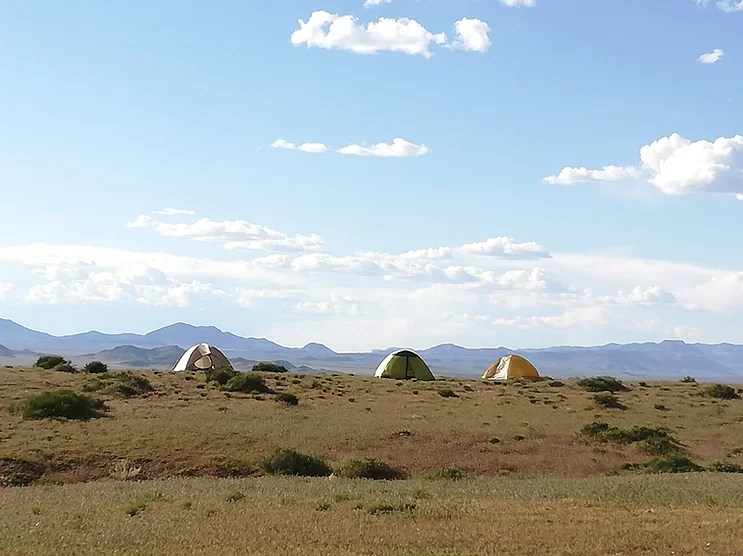
    Botanical field work in a harsh climate is an endurance sport. It is vitally important to prioritize the care of yourself, your team and your gear. You are a professional athlete existing in one of the world’s extreme environments. However, you aren’t just using your body, you’re also required to apply your education and skills with limited external support aside from your team. Use this guide to limit fatigue, increase preparedness and be mindful of you and your team needs.

    1. Cover

    Cover all of your limbs, especially if you are fair. Wear long sleeves, long pants, a wide brimmed hat, sunscreen on exposed skin and a bandana; your shoes also are included. If you are doing field work that is off the beaten path in rough terrain, do not wear lightweight trail runners. You will get cheatgrass (Bromus tectorum) in them and will cut your feet. I recommend wearing hiking boots that have a higher ankle and have leather uppers. Socks are vital to keep your feet happy and wool has great moisture-wicking properties. Using the right kind of field gear on your body will prevent the formation of injuries and heat-related illnesses.

    To learn more about boots, check out ‘All About Boots: A Botanist’s Perspective’

    2. Cool

    Consider the kind of fabric you are using for your gear. I prefer to wear a cotton or linen ‘overshirt’ to protect my skin and keep cool. However, you need to be careful with chafing, so take frequent breaks and remove your pack to dry out. When I first started out, I would get my field clothes from the thrift store or use hand-me-downs from relatives. Now, I prefer light-colored shirts that have UV protection. Desert nights are very, very cold and the mornings are cool. Bring layers for day and night use. There’s a trend in the outdoor industry to be “ultralight”. You’re probably car camping, so weight isn’t as much of an issue. Bring what you think you will need. You will pare down your field work belongings as the weeks go on.

    3. Coarse

    The desert is a harsh environment, especially if you aren’t used to it. Your hair, skin, eyes, hands and lips will feel it the most because they are continually exposed to the dry air. I recommend finding a hydrating lotion and/or lip balm. If you have long hair, to prevent matting and painful tangles, try oiling your hair with jojoba, coconut oil or conditioner and braiding your hair in a protective style appropriate for your hair texture. Consider getting sunglasses that completely wrap around to protect your eyes from the dust and sunburn. I would skip wearing contacts and get prescription glasses and sunglasses. Getting sand in your contacts can cause corneal abrasion.

    4. Care

    Your physical, emotional and mental health are important to the success of field season. Physical health can include stretching in the morning and evening to avoid injury, inspecting your feet for blisters, splinters or other issues. Remove your boots when you’re able to and wear sandals to let your feet breathe. This includes grooming: if water for bathing isn’t available, use baby wipes, bandanas, drybrush to get all the soil and sweat off of your body.

    Bring food & drinks that you want to eat. This isn’t the time to try a new diet. Your body needs nutrients and you need to eat. Food needs to be shelf stable to avoid food-borne pathogens. Please drink electrolytes to avoid electrolyte depletion. I’m a blue-flavor gatorade gal. Let your crew members and/or crew lead know immediately if you are injured or aren’t feeling well.

    Emotional health can include many things, but we’re going to focus on setting boundaries. You will be working closely with your co-workers for 8-16 weeks. It is likely that you will have disagreements: collection methodology, where to camp, where to gas up, what to listen to in the car, etc. If you feel safe to do so, speak up and communicate your needs. Your employer wants you to complete difficult tasks in a challenging environment. It is more expensive to hire and train a new crew member than to hear your concerns.

    See our Bill of Rights for Natural Resource Professionals.

    Arguably, mental health is the most important factor to keeping your morale up during field season. My go-to for a quick pick-me up on a hard day are sweets. I’m a big fan ginger candies and fancy instant coffee for cold mornings. To build rapport with your crew, bring treats to share (barring food allergies or dietary restrictions). If you need to recharge after a long day, bring activities that you enjoy. I bring books (physical or electronic/audiobooks), a journal/notebook, travel-sized art supplies and my current knitting project.

    5. Chaos

    Something will go wrong during field season, it is just a matter of time. It could be multiple flat tires two hours away from the nearest tire shop, an allergic reaction or injury, or an acute safety incident.

    I’ve found the best way to prepare for these situations is to have a personal first aid kit that holds your medications (OTC and prescribed), eye drops, bandaids, tweezers & needles (for removing splinters), alcohol wipes and anti-bacterial ointment. If you have asthma or severe allergies, inform your team members where your emergency medication is in your pack. Know where the nearest hospital, grocery store (water source), gas station and repair shop are. Be prepared to bail out if you or your team’s safety is comprimised–few jobs are worth not coming home to your loved ones and this isn’t one of them.

    Some days are going to be awful and you will want to quit. If you do, that’s okay. It’s not for everyone and there are even more natural resource jobs in office environments than ever before.

    If you liked this article and want to learn more about Desert Field Skills Training Workshops, book a free 15 minute consultation with us to learn more.